
Choosing the right mini dumper starts with the material you need to move, the weight of each load, the ground conditions, and the space available on the jobsite. Payload alone is not enough. A machine can have a suitable rated capacity but still be inefficient if its hopper is too small, its tracks or wheels do not suit the terrain, or it cannot pass through the narrowest access point.
Quick answer: compare the rated payload, hopper volume, overall width, drive system, dumping method, travel distance, slope limits, maintenance requirements, and total cost of ownership. Then verify every shortlisted machine against the manufacturer’s official specifications and your actual working conditions.
This mini dumper buying guide explains each decision in practical terms and includes a final checklist you can use before requesting a quotation.
Mini Dumper Selection at a Glance
| Selection Factor | What to Check | Why It Matters |
|---|---|---|
| Rated payload | Heaviest normal load, not just average load | Prevents overloading and unnecessary extra trips |
| Hopper capacity | Material volume and density | A large hopper can exceed the weight limit when filled with dense material |
| Machine width | Narrowest gate, doorway, path, or greenhouse aisle | Determines whether the dumper can reach the work area |
| Tracks or wheels | Surface firmness, mud, slopes, travel distance, and maintenance | Affects traction, ground pressure, speed, and wear |
| Dumping system | Discharge direction and required dumping height | Determines where the load can be unloaded |
| Operating cycle | Loading time, travel distance, unloading time, and return route | Shows real productivity rather than nominal capacity alone |
1. Match Payload and Hopper Capacity to the Material
Rated payload is the maximum load the machine is designed to carry under the manufacturer’s specified conditions. Choose a capacity based on the heaviest load you expect to move regularly. Continually operating at or above the rated payload can increase wear, reduce stability, and create avoidable safety risks.
Hopper capacity measures volume, while payload measures weight. These figures must be considered together because equal volumes of different materials can have very different weights. A hopper filled with dry leaves, soil, wet sand, gravel, or demolition debris will place a different load on the machine.
| Approximate Payload Class | Typical Use | Main Buying Consideration |
|---|---|---|
| Under 1 tonne | Landscaping, farms, property maintenance, restricted-access work | Width, maneuverability, and surface conditions |
| 1–2 tonnes | Commercial landscaping and small construction projects | Balance between capacity, traction, and machine size |
| 2–3 tonnes | Frequent earth, aggregate, and construction-material transport | Structural capacity, unloading method, and cycle productivity |
| Over 3 tonnes | Demanding construction and heavy material movement | Site access, transport logistics, operating cost, and compliance |
These ranges are general purchasing references, not universal machine classifications. Always use the rated payload and operating limits stated by the manufacturer of the specific model.
2. Choose Between Tracks and Wheels
The choice between a tracked and wheeled mini dumper depends mainly on terrain, travel distance, ground pressure, and maintenance priorities.
Tracked Mini Dumper
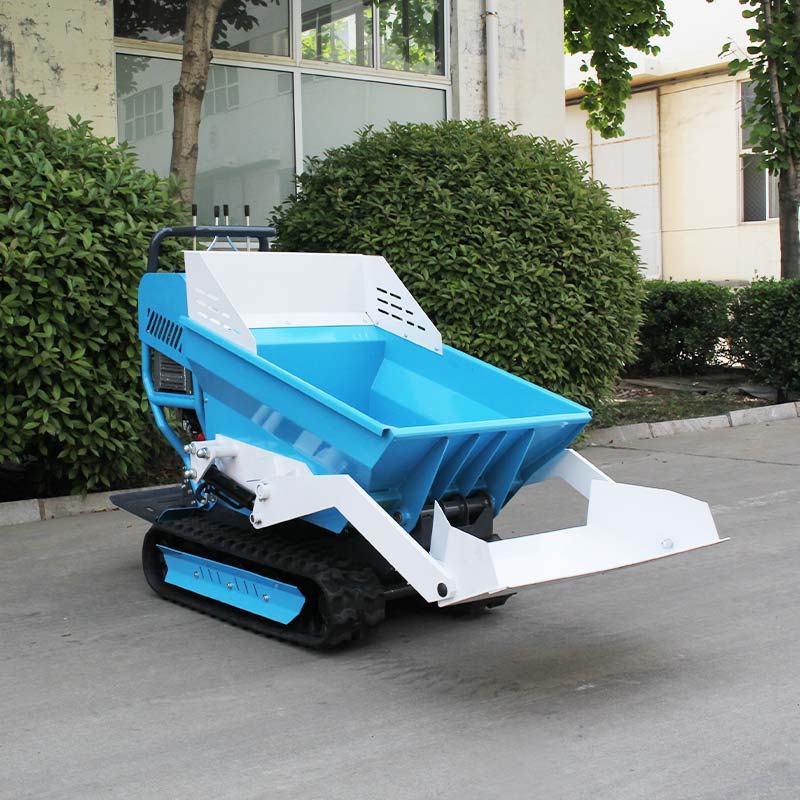
A tracked mini dumper is generally better suited to soft, muddy, loose, or uneven ground. The larger contact area can improve traction and distribute the machine’s weight over the surface. Tracks are often useful on unfinished construction sites, farms, orchards, landscaping projects, and rough access routes.
Wheeled Mini Dumper
A wheeled mini dumper can be practical on concrete, paved yards, compacted gravel, and other firm surfaces. Wheels may provide faster travel and simpler running-gear maintenance, depending on the machine design and operating environment.
| Factor | Tracked Dumper | Wheeled Dumper |
|---|---|---|
| Soft or muddy ground | Generally better traction and flotation | More likely to lose traction |
| Firm, finished surfaces | Suitable with the correct track type | Generally well suited |
| Ground pressure | Usually lower because of the larger contact area | Usually higher at each tire contact point |
| Travel speed | Designed mainly for jobsite movement | Can be more efficient over firm travel routes |
| Wear inspection | Tracks, rollers, idlers, and sprockets | Tires, wheels, steering, and brakes |
Practical rule: choose tracks when difficult terrain and access are the main constraints. Consider wheels when most work takes place on firm surfaces and longer travel routes are more important.
3. Select the Right Dumping System
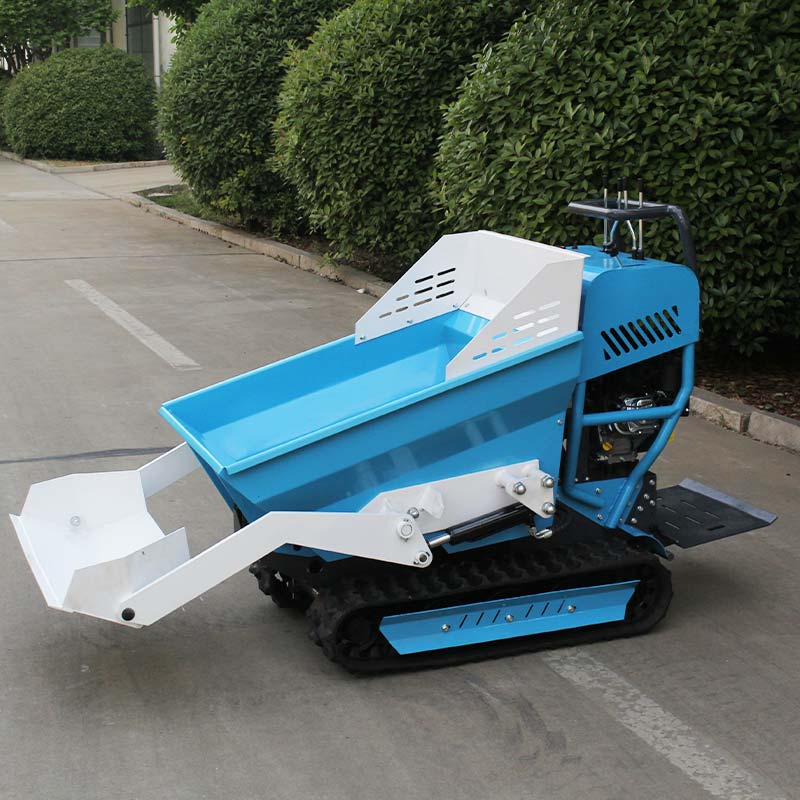
The dumping system determines how and where the machine can discharge material. Measure the receiving point and review the available maneuvering space before choosing a configuration.
| Dump Configuration | Suitable Application | What to Confirm |
|---|---|---|
| Front dump | Open stockpiles, trenches, and low-level discharge areas | The machine can approach the unloading point directly |
| Three-way dump | Restricted sites where side discharge reduces repositioning | Available side clearance and stability during tipping |
| High-tip dump | Loading skips, containers, or truck beds | Maximum discharge height and operating limits at full lift |
A more complex dumping system is not automatically better. The correct choice is the simplest configuration that can unload safely at the required height and position.
4. Evaluate Terrain, Slopes, and Access
Real jobsite conditions can matter more than nominal payload. Before purchasing, record the narrowest access width, maximum working slope, surface type, turning space, and any steps, curbs, or obstacles along the travel route.
- Soft soil and mud: prioritize traction, track contact area, and ground clearance.
- Slopes: verify the manufacturer’s permitted gradient, load restrictions, travel direction, and operating instructions.
- Finished surfaces: consider tire or track type, turning marks, floor loading, and wear.
- Narrow access: compare the machine’s full operating width with the narrowest gate or passage, allowing practical clearance.
- Uneven terrain: evaluate stability, ground clearance, load position, and the risk of material shifting.
A machine’s ability to climb a slope does not automatically mean it can safely carry a full load on that slope. Follow the manufacturer’s operating manual and the safety requirements that apply at the destination site.
5. Calculate Real Transport Productivity
Mini dumper productivity depends on more than payload. A useful preliminary calculation is:
Hourly transport output = usable payload × completed load cycles per hour
Each cycle includes loading, outbound travel, unloading, return travel, and repositioning. A higher-capacity machine may not improve output if it takes longer to load, cannot use the shortest route, or needs extra space to turn.
| Operating Pattern | Priority |
|---|---|
| Short-distance, occasional transport | Compact dimensions and simple controls |
| Frequent loading cycles | Usable payload, loading time, and unloading speed |
| Longer jobsite routes | Travel speed, operator comfort, and fuel consumption |
| Difficult terrain | Traction, stability, ground clearance, and route planning |
6. Compare Maintenance and Total Cost of Ownership
The lowest purchase price does not always produce the lowest operating cost. Compare routine service, wear parts, fuel, downtime, transport, and supplier support over the expected ownership period.
| Cost Factor | Questions to Ask |
|---|---|
| Routine maintenance | What are the engine, hydraulic, lubrication, and inspection intervals? |
| Wear parts | What is the expected life and availability of tracks, rollers, sprockets, tires, and hydraulic hoses? |
| Fuel and utilization | How many hours and cycles will the machine complete each day? |
| Downtime | Are common spare parts stocked, and how is technical support provided? |
| Transport | What are the machine’s weight, shipping dimensions, and loading requirements? |
| Documentation | Are the required operating manual, parts information, emissions documents, and import documents available? |
7. CSTAR CSG-T500 Mini Dumper Specifications
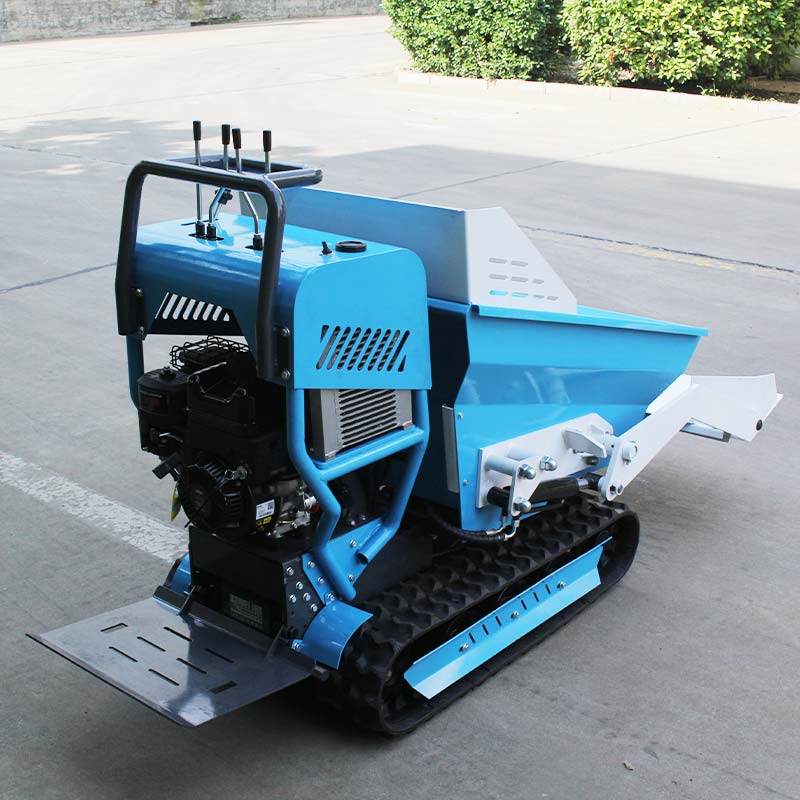
CSTAR currently offers the CSG-T500 compact tracked mini dumper. It is designed for buyers who need a 500 kg material carrier for construction, landscaping, agricultural, and property-maintenance work.
| Specification | CSG-T500 |
|---|---|
| Rated payload | 500 kg |
| Hopper capacity | 0.22 m³ |
| Drive type | Tracked |
| Dump type | Hydraulic tipping, front dump |
| Climbing ability | 20° under the manufacturer’s specified conditions |
| Travel speed | 1.7–3.5 km/h |
| Engine options | Koop / Rato / B&S; 178F / R210 / RX6.5 |
| Rated power range | 4.2–4.8 kW |
| Emission options | EPA / Euro 5 |
| Overall dimensions | 1735 × 844 × 1255 mm |
Compare these specifications with the actual material weight, terrain, access width, travel distance, dumping position, and daily operating schedule. Configuration availability and final specifications should be confirmed when requesting a quotation.
View the CSTAR mini dumper category and current specifications.
8. Mini Dumper Pre-Purchase Checklist
Collect the following information before asking a supplier to recommend a machine:
- Maximum load: What is the heaviest normal load?
- Material: Are you moving soil, sand, gravel, stone, manure, waste, or another material?
- Material density: Could a full hopper exceed the rated payload?
- Access width: What is the narrowest gate, doorway, path, or aisle?
- Terrain: Is the route muddy, rocky, paved, compacted, soft, or uneven?
- Slope: What is the steepest part of the operating route?
- Travel distance: How far is each loaded and unloaded trip?
- Dumping point: Is front dumping sufficient, and what discharge height is required?
- Daily utilization: How many operating hours and load cycles are expected?
- Destination: What emissions, safety, import, and documentation requirements apply?
The best mini dumper is not necessarily the machine with the highest payload. It is the machine that can move the required material through the available route, unload at the correct position, and complete the work reliably without exceeding its operating limits.
Need help checking the CSG-T500 against your application? Send CSTAR your material type, maximum load, access width, terrain, travel distance, dumping requirement, daily operating hours, and destination country. Request a configuration review and quotation.
Frequently Asked Questions
What is a mini dumper used for?
A mini dumper moves loose bulk materials over short distances. Typical loads include soil, sand, gravel, stone, manure, landscaping material, and construction waste in areas where larger vehicles have limited access.
How do I choose the right mini dumper capacity?
Start with the heaviest load you move regularly. Then compare its density and volume with the machine’s rated payload and hopper capacity. Also account for access width, terrain, travel distance, and operating frequency.
Should I choose a tracked or wheeled mini dumper?
Choose a tracked dumper when traction and access over soft, muddy, loose, or uneven ground are priorities. A wheeled dumper can be more practical on firm surfaces and longer jobsite travel routes.
Which mini dumper tipping system should I choose?
Use a front-dump machine for direct unloading into open or low-level areas. Consider three-way dumping when side discharge reduces repositioning, or high-tip dumping when material must enter a raised container. Confirm the required discharge height and available clearance.
Can a mini dumper operate on slopes?
Some mini dumpers can work on slopes, but the permitted gradient depends on the model, load, surface, travel direction, and manufacturer instructions. Never treat maximum climbing ability as permission to carry a full load on every slope.
What information should I provide when requesting a quotation?
Provide the material type, maximum load, access width, terrain, maximum slope, travel distance, dumping height or direction, daily operating hours, and destination country. This allows the supplier to check whether the proposed configuration fits the application.