
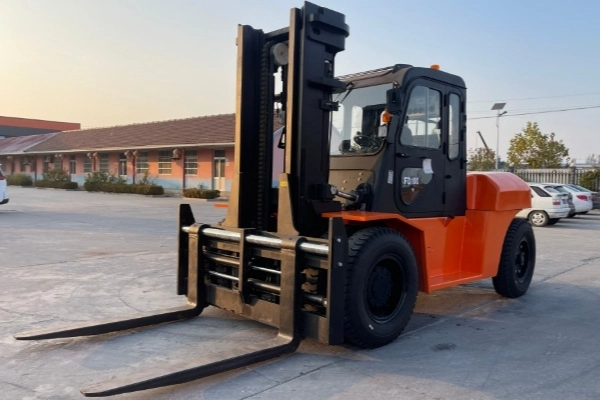
A forklift may be one of the busiest machines in a warehouse, factory or loading yard. It repeatedly lifts loads, changes direction in confined areas and operates close to people, racks and other equipment. A small defect that goes unnoticed at the start of a shift can therefore become a safety risk, an unplanned stoppage or a much more expensive repair.
A practical forklift maintenance checklist separates three responsibilities: the operator’s pre-use inspection, routine maintenance planned by the equipment manager, and technical service completed by qualified personnel. These are not interchangeable. Operators should identify and report defects; they should not attempt repairs they are not trained or authorized to perform.
This guide gives warehouse managers, equipment buyers and fleet supervisors a usable schedule for counterbalance forklifts and related material-handling equipment. Because an electric forklift, a diesel forklift, a stacker and a pallet truck use different power systems and components, always adapt the checklist to the manufacturer’s manual and the truck’s actual configuration.
Why Forklift Maintenance Is Important
Forklift maintenance is not only about keeping the machine running. It creates a documented process for finding changes before they affect people, loads or production. The value becomes clearer when maintenance is connected to four operational outcomes.
| Benefit | What It Means in Practice |
|---|---|
| Improve safety | Identify damaged forks, tire problems, leaks, weak brakes or failed warning devices before the truck enters an active work area. |
| Reduce downtime | Plan service around production instead of waiting for a preventable failure during a loading or picking cycle. |
| Lower repair cost | Deal with wear, loose connections and small leaks before they damage related components. |
| Extend service life | Keep the battery, engine, mast, hydraulic system and chassis operating within their intended conditions. |
Inspection records add another benefit: they reveal patterns. If the same truck repeatedly loses hydraulic oil, damages one tire or needs unusually frequent battery charging, the record helps a manager distinguish an isolated defect from an operating, route or application problem.
Forklift Maintenance Schedule Overview
The schedule below is a planning framework, not a replacement for a service manual. Dust, corrosive material, cold storage, outdoor work, long shifts and frequent lifting can shorten maintenance intervals. Record both calendar time and operating hours so service is not missed on trucks that accumulate hours quickly.
| Maintenance Frequency | Main Inspection Items | Typical Responsibility |
|---|---|---|
| Before operation / each shift | Forks, mast, tires, leaks, brakes, steering, controls and safety equipment | Trained operator |
| Weekly | Battery or engine bay, hydraulic system, fluid levels, visible cables, hoses and fasteners | Fleet staff or qualified technician, according to task |
| Monthly | Electrical connections, steering components, brakes, mast chains and rollers, structural wear and service records | Qualified maintenance personnel |
| Typical 250–500 operating-hour window | Model-specific lubrication, filters, fluids, adjustments and diagnostic checks | Authorized service personnel |
| Annual or locally required interval | Comprehensive inspection and any legally required examination | Competent or authorized examiner |
The 250–500-hour range is commonly useful for planning, but it is not universal. A specific forklift may require attention sooner or later. Use the interval in its operation and maintenance manual, and shorten it where the duty cycle or environment demands.
Daily Forklift Maintenance Checklist Before Operation
The daily forklift inspection checklist should be completed before the truck is put into service. For a vehicle used continuously across several shifts, carry out the inspection at the beginning of each shift. Use a model-specific form, record the truck ID and hour-meter reading, and do not reduce the process to ticking boxes without physically checking the machine.
1. Check the Forks and Mast
Look along both fork arms for cracks, bends, uneven height, damaged tips and excessive wear at the heel. Check that retaining devices are present and that the forks are correctly positioned. A capacity label cannot compensate for a structurally damaged fork.
Inspect the mast, rollers, chains, carriage and load backrest from a safe position. During a no-load functional check, the carriage should lift and lower smoothly without binding, jerking or unexpected movement. Do not place hands inside the mast or attempt to measure or adjust chains while the system is energized.
2. Inspect Tires and Wheels
Check every tire for cuts, chunking, embedded material, flat spots and uneven wear. Pneumatic tires also need the specified pressure; solid tires should be checked against their wear limit. Look for damaged rims and visibly loose or missing wheel hardware. Tire condition affects stability, braking and clearance, so a worn tire is not merely a comfort issue.
3. Test the Brakes and Steering
In the designated test area, confirm that the service brake, parking brake and steering respond normally. Pay attention to excessive pedal or lever travel, pulling to one side, delayed response, vibration or new sounds. A change from the truck’s normal behavior should be reported even if it still moves.
4. Check Safety Equipment
Confirm the condition and operation of all equipment fitted to the truck, including:
- Horn, warning lights, work lights and reverse alarm
- Seat belt, operator-restraint system and seat switch
- Mirrors, cameras or proximity devices where fitted
- Overhead guard and load backrest
- Emergency disconnect or emergency-stop control where fitted
- Capacity plate, warning labels and control markings
5. Check the Hydraulic System
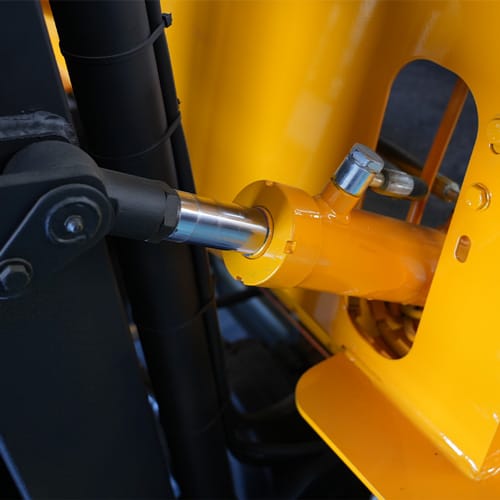
Inspect the floor beneath the parked truck and the visible cylinders, hoses and fittings for fresh fluid. Check the hydraulic-fluid level only by the method specified for the model. During the functional test, lift, tilt and any installed attachment should operate smoothly. A damaged hose, active leak, drifting carriage or uncontrolled movement requires the truck to be removed from service.
6. Complete the Walk-Around
Look for loose panels, damaged steps or handholds, debris near moving parts, a damaged operator compartment and anything hanging below the chassis. Confirm that the battery connector or fuel cap is secure and that no warning indicator remains active after start-up. Sign the inspection record only after the visual and functional checks are complete.
Weekly Forklift Maintenance Checklist
Weekly checks go beyond the operator’s quick pre-shift review. Plan them when the truck is parked, isolated and cool enough to inspect safely. The exact tasks depend on the power system.
Battery Inspection for Electric Forklifts
- Review the state of charge and any charger or battery warning messages.
- Inspect the battery case, connector, cables and restraints for damage, heat or corrosion.
- Keep the top of the battery clean and dry according to the battery supplier’s instructions.
- For serviceable flooded lead-acid batteries, have trained staff check electrolyte at the specified point in the charging cycle and use the approved water-filling procedure.
Engine and Fuel-System Inspection for Diesel Forklifts
- Check engine-oil and coolant levels using the manufacturer’s procedure.
- Inspect visible fuel, coolant and air-intake components for leaks, looseness or damage.
- Review the air-filter restriction indicator and service history rather than replacing filters only by appearance.
- Check the exhaust system for damage, unusual smoke or a change in sound, and keep diesel trucks out of unsuitable enclosed areas.
On both truck types, inspect visible hydraulic hoses, mast components and accessible fasteners. Cleaning should remove material that traps heat or hides leaks without directing water or compressed debris into sensitive electrical, bearing or intake areas.
Monthly and Hour-Based Service Checks
Monthly checks should be assigned to personnel who understand the truck and have the correct tools and service information. They commonly include the mast chains and rollers, fork wear, brake system, steering linkage, wheel hardware, electrical connections, hydraulic system and structural mounting points. Lubrication points must be serviced with the specified product and interval; more grease is not automatically better.
Hour-based service should follow the maintenance chart for the exact model, engine and battery. Record replaced fluids and filters, measured wear, fault codes and outstanding recommendations. This history is especially valuable when comparing repair cost between trucks or evaluating whether a machine should be retained or replaced.
Electric Forklift Maintenance Tips
Electric forklift maintenance centers on the battery, charger, motor, controller and electrical connections. The battery chemistry matters: applying a flooded lead-acid routine to a sealed lithium-ion pack would be inappropriate and potentially dangerous.
| Battery Type | Maintenance Focus | Management Question |
|---|---|---|
| Flooded lead-acid | Correct charging cycle, approved electrolyte checks, ventilation, cleanliness and connector condition | Are watering and charging being completed by trained staff at the correct time? |
| Lithium-ion | Compatible charger, charging temperature, battery-management-system warnings and cable condition | Are operators using the approved charger and responding correctly to battery warnings? |
Do not bypass a battery-management system, open a lithium battery enclosure or mix chargers between batteries unless the manufacturer specifically approves it. Damaged, swollen, unusually hot or leaking batteries require immediate isolation under the site’s battery-emergency procedure.
For the motor and controller, watch for new noise, heat warnings, reduced travel performance and damaged connections. Keep cooling paths clean using the approved method. If your operation is planning a replacement or a different duty cycle, compare CSTAR’s electric forklift range by capacity, battery type, shift pattern and charging window—not battery voltage alone.
Diesel Forklift Maintenance Tips
Diesel forklifts add an engine, fuel system, cooling system, air intake and exhaust system to the maintenance plan. Their service requirements are strongly affected by dust, temperature, load cycle and idle time.
Engine Maintenance
Replace engine oil, oil filters, fuel filters and air-cleaner elements at the specified hours and with the approved grades. Check the cooling system only when safe to do so; never open a pressurized hot cooling system. A history of overheating, falling oil pressure, hard starting or abnormal smoke needs diagnosis rather than repeated topping up.
Fuel and Exhaust Systems
Use clean fuel of the specified type and control storage contamination. Water, dirt and unsuitable fuel can create symptoms that look like an engine failure. Injector work and exhaust-system repairs belong to qualified technicians. When a fleet needs sustained outdoor operation and heavier-duty cycles, compare the intended work surface, ventilation, engine support and capacity requirements before selecting a diesel forklift truck.
Preventive Forklift Maintenance Checklist
Preventive forklift maintenance works when each item has an owner, an interval and a recorded outcome. “Check regularly” is too vague unless the fleet defines what regularly means for that truck and work area.
| Component | Recommended Action | Record |
|---|---|---|
| Tires and wheels | Inspect wear and damage; replace at the specified limit; verify wheel hardware through the approved service procedure. | Condition, measurement where required and replacement date |
| Battery and charger | Maintain the correct charging routine and inspect connectors, restraints and warnings. | Charge pattern, faults and capacity concerns |
| Hydraulic system | Check for leaks, hose damage, fluid condition and abnormal lift behavior. | Leak location, fluid added and repair completed |
| Braking and steering | Test function and have wear, travel and components inspected at the model-specific interval. | Operator report, measurements and corrective work |
| Mast and forks | Inspect damage and wear; lubricate and measure only as specified. | Wear findings and technician sign-off |
| Electrical components | Keep connections secure and clean; investigate heat, corrosion and repeated fault codes. | Fault code, affected circuit and repair outcome |
Common Forklift Problems and the Correct First Response
The table below is for triage, not do-it-yourself repair. Similar symptoms can have different causes, and a wrong adjustment can create a new safety problem.
| Problem | Possible Cause | Correct First Response |
|---|---|---|
| Forklift will not lift normally | Low fluid, leak, control fault, pump issue or overload | Lower the load safely if possible, stop operation and arrange hydraulic and load-condition checks. |
| Short electric runtime | Charging practice, battery age, temperature, charger fault or unusually high duty cycle | Review charge records and warnings; have the battery and charger tested before replacing either one. |
| Difficult or inconsistent steering | Tire condition, steering wear, hydraulic or electrical fault | Remove the truck from service and have steering and tires inspected. |
| Diesel engine loses power | Restricted air or fuel flow, contaminated fuel, cooling issue or engine fault | Stop heavy operation, check service indicators and arrange engine diagnosis. |
| New vibration or noise | Loose or worn component, wheel damage, mast wear or power-system fault | Record when the symptom occurs and isolate the truck until the source is identified. |
Forklift Maintenance Checklist for Warehouse Managers
A good checklist does not help if completed forms disappear into a folder. Warehouse managers should turn inspection results into a simple control loop:
- Identify every truck. Use a fleet number and record the model, serial number, power type and hour-meter reading.
- Use a model-specific form. A diesel counterbalance truck, lithium electric forklift and walkie stacker should not share an identical checklist.
- Define stop-use defects. Operators must know which findings require immediate isolation and who has authority to release a truck after repair.
- Train and audit. Demonstrate how to inspect each point, then periodically observe the inspection rather than judging compliance from completed forms alone.
- Plan preventive service. Use calendar dates and operating hours, and adjust intervals when dust, cold, slopes or multi-shift work increase demand.
- Track parts and repeat failures. Keep suitable wear parts available and investigate recurring faults instead of treating each repair as unrelated.
The same management approach applies to smaller warehouse equipment, but the inspection points must match the machine. Review the intended load, aisle, lift height and duty cycle when maintaining or replacing a stacker forklift or pallet truck.
When Should You Replace a Forklift?
Age alone does not decide when a forklift should be replaced. A well-matched truck with documented service may remain useful longer than a newer machine exposed to the wrong application. Review replacement when several of the following occur together:
- Breakdowns are becoming more frequent or disrupting critical shifts.
- Annual repair and downtime costs are rising without restoring reliable service.
- Parts or qualified support for the model are difficult to obtain.
- The current truck no longer matches load weight, lift height, aisle width or shift pattern.
- Battery, emissions, operator-protection or control technology no longer meets the site’s practical requirements.
- A structural or safety concern cannot be corrected economically and properly.
Compare total cost and application fit rather than repair cost alone. When requesting a replacement recommendation, provide the heaviest regular load, load center, required lift height, aisle width, surface, gradients, attachments and daily operating hours. Those details determine whether another counterbalance forklift, a narrower stacker or a different power system is the better choice.
Frequently Asked Questions
How often should a forklift be serviced?
Service frequency depends on operating hours, environment, duty cycle and the manufacturer’s recommendations. Inspect the truck before use or at each shift, then schedule weekly, monthly and hour-based maintenance according to the model’s manual and site conditions.
What should be checked daily on a forklift?
Check the forks, mast, tires, wheels, brakes, steering, controls, hydraulic system, visible leaks and fitted safety devices. Record defects and do not operate the truck if a condition could affect safe operation.
How do you maintain an electric forklift battery?
Use the approved charger, follow the charging schedule for the battery chemistry, inspect cables and connectors, keep the battery clean and respond to warning messages. Only trained staff should perform electrolyte work on serviceable flooded lead-acid batteries, and lithium enclosures should not be opened for routine maintenance.
How long does a forklift usually last?
Forklift life depends on operating hours, load cycle, environment, maintenance quality and whether the truck is correctly matched to the job. Service history, reliability, safety and total operating cost are more useful replacement indicators than age alone.
Planning a Forklift Replacement or Fleet Upgrade?
Send CSTAR Machinery your load weight and dimensions, lift height, aisle width, floor or yard conditions, attachments and daily working hours. The team can help you compare suitable electric, diesel and warehouse-handling configurations without treating rated capacity as the only selection factor.