
Choose mini skid steer attachments by matching four things: the mounting interface, the hydraulic requirements where applicable, the attachment and load against the machine’s rating, and the controls and connections. Check these against the exact loader configuration before comparing prices.
A bucket, auger and set of pallet forks place different demands on the same machine. This guide explains how to compare common attachments, check compatibility and prepare a quotation request with the information a supplier needs.
Common Mini Skid Steer Attachments and Their Uses
Start with the task and material, then identify an attachment built for that work. The categories below are a useful starting point; availability and fit depend on the machine model.
| Attachment | Main task | What to check before buying |
|---|---|---|
| General-purpose bucket | Moving loose material and clearing | Width, weight and the mounting interface |
| Pallet forks | Handling pallets and materials | Where the load sits, and the machine’s rating with the forks fitted |
| Auger | Drilling holes | Hydraulic requirements, the bit and the ground conditions |
| Grapple | Gripping branches and debris | Weight, reach and the hydraulic controls |
| Trencher | Digging trenches | Working dimensions, soil type and hydraulic match |
| Broom | Sweeping working surfaces | Working width, drive and control requirements |
| Grading attachment | Leveling material | Working width, weight, mounting interface and any hydraulic functions |

The CSGL-V1000 product page shows additional attachment categories, including a brush cutter, log grapple, snow blower, mixing bucket, land leveler, rotary tiller and road sweeper. For a quotation, specify the tool you need and request its mounting, hydraulic and operating requirements for the loader configuration.
Are Mini Skid Steer Attachments Universal?
Mini skid steer attachments use several mounting systems. A full-size skid steer plate and a mini-loader plate can have different dimensions and locking arrangements. Even within the mini category, interchangeability depends on the specific interface. For example, IronCraft’s attachment compatibility guide distinguishes full-size universal, Mini Universal, Bobcat MT and Mini ASV/Terex mounting arrangements and recommends comparing the machine’s plate with the relevant drawing.
A photograph helps identify the mounting type. A dimensional drawing and the machine and attachment documentation establish whether the plate and locking mechanism match. The words “quick attach” describe a connection method, not confirmed compatibility between models.
Four Compatibility Checks Before You Buy

1. Mounting Interface and Locking Engagement
Compare the plate dimensions, engagement points and locking arrangement. The attachment must seat correctly and allow the locks to engage fully. Ask for an interface drawing for both the machine and attachment, together with confirmation of the approved fit. Use actual measurements and documentation for the quoted configuration rather than estimating dimensions from a general illustration.
2. Hydraulic Flow, Pressure and Return Requirements
For powered attachments, compare the machine’s auxiliary hydraulic output with the tool’s specified operating requirements:
- Available auxiliary flow and pressure at the attachment connections
- The flow and pressure range the attachment needs
- The fittings, the oil circuit and the return requirements
- A case drain line, only where the attachment calls for one
- The demands of continuous operation
Match the specified flow and pressure range. Higher flow is useful only when the tool is designed for it and the machine supports the required setting. The same comparison applies to wheeled mini loaders and mini track loader attachments. The CSGL-V1000 specification lists a hydraulic system rated pressure of 17–20 MPa. That figure does not establish the flow and pressure available at the auxiliary attachment couplers. Request those auxiliary-circuit details before selecting a powered attachment.
3. Attachment Weight, Load Position and Machine Rating
Record the attachment’s own weight separately from the material or load it carries. Load position, reach and working height also affect the combination. Use the manufacturer’s approved operating capacity for the machine with that attachment fitted. The CSGL-V1000 page lists a 500 kg rated load and a 650 kg maximum load. Use the rated-load figure for the published product comparison; confirm the permitted load for the selected forks, grapple or other tool separately. The 650 kg maximum-load listing is not an approved working rating for every attachment.
4. Couplers, Hoses and Electrical Controls
Last, check how the attachment gets its power and its commands:
- Whether the hydraulic couplers on the attachment match those on the machine
- Whether the hose layout suits the movements the attachment makes
- Whether an electrical connection or a dedicated control is needed
- Which connectors and hoses come with the quotation
A tool that fits and runs can still be unusable if the hoses foul when it tilts, or if it needs a switch the machine does not have.
Match the Attachment to Your Working Space
Measure the complete machine-and-attachment configuration against the route and working area. Include:
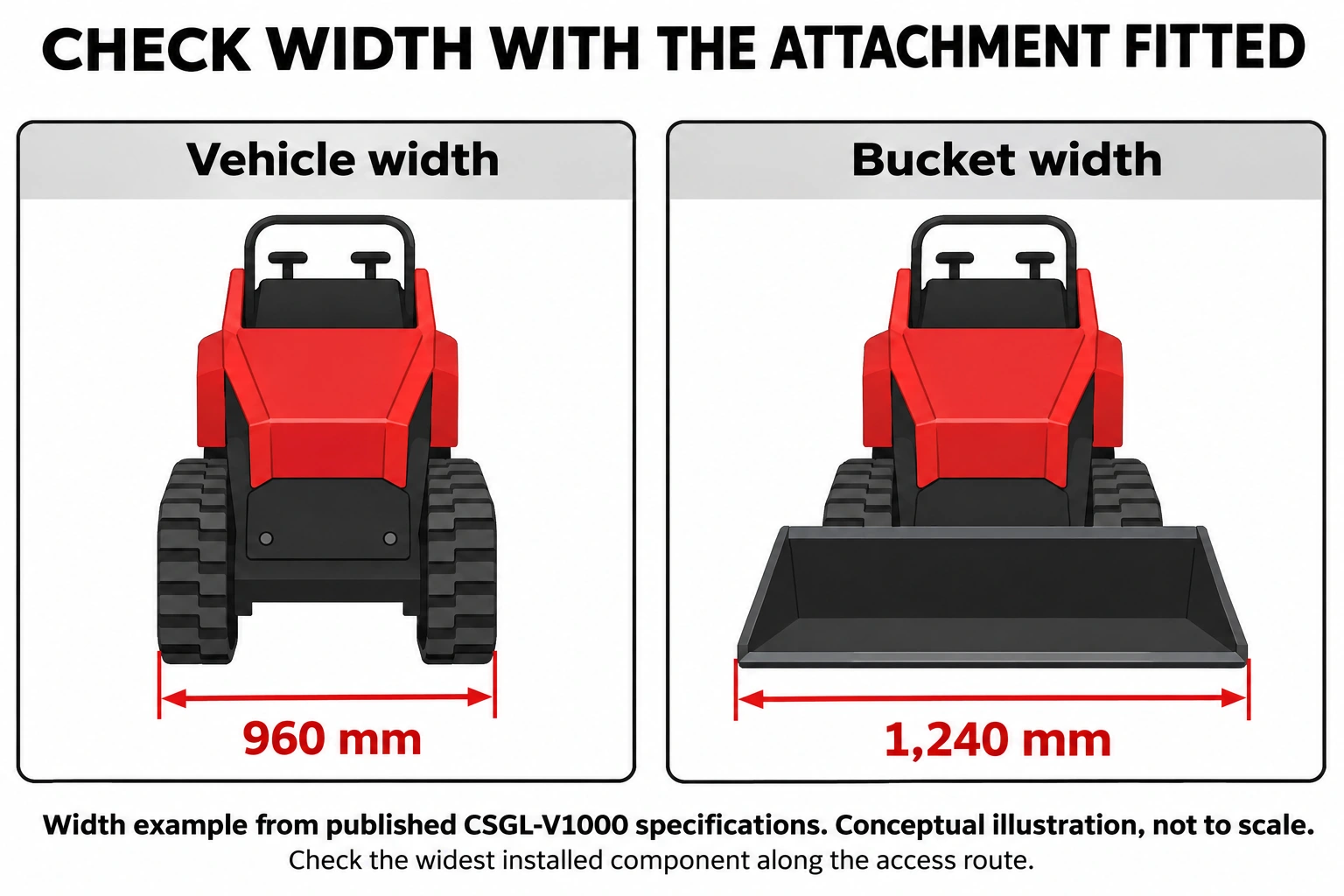
- The working width with the attachment fitted, which is not the width of the bare machine
- Gates, passages, turning places and the space needed to transport the machine
- The ground, the floor, obstacles and how the work will actually be done
- That a machine which fits through an entrance may not fit through it with the attachment on
The CSGL-V1000 specification illustrates why vehicle width and attachment width need separate checks: it lists a 960 mm vehicle width and a 1,240 mm bucket width. Comparing only the vehicle figure with a 1,000 mm opening would overlook the wider bucket. Assess the widest installed component and the space needed to maneuver along the route.
Three Practical Buying Examples
These illustrative buying scenarios show how to apply the checks.
Buying a bucket for a replacement machine
A buyer replacing a loader wants to keep an existing bucket. Begin with the mounting dimensions and locking engagement, then check the bucket’s weight, intended material load and width. Establish both the machine match and whether the fitted bucket suits the access route.
Adding an auger for landscaping work
Compare the loader’s auxiliary flow and pressure with the auger drive’s requirements. Confirm the mounting system, couplers, controls and any required case drain connection. Then select the bit for the hole and ground conditions, and check suitability for the expected operating duration.
Choosing pallet forks for material handling
Start with the load’s weight, dimensions and position on the forks. Forks can place the load farther forward than a bucket, so confirm the machine’s approved capacity for the actual arrangement. Check fork dimensions and access space as well as the fork attachment’s own rating.
How to Compare Attachment Quotations
Put quotations on the same technical basis before comparing totals. Use the following table to identify the supporting information each supplier has provided.
| Check | Machine information | Attachment information | Confirmation to request |
|---|---|---|---|
| Mounting | Model, interface drawing and locking arrangement | Mounting dimensions and engagement points | Approved fit for the quoted combination |
| Hydraulics, where required | Auxiliary flow, pressure and connections | Accepted operating range and return requirements | Circuit match, including a case drain if specified |
| Weight and load | Approved operating capacity for the configuration | Attachment weight, carried load and load position | Permitted working load for the intended task |
| Controls and connections | Coupler types and available controls | Hoses, connectors and control requirements | Included components and any additional parts needed |
Also compare attachment model, purpose, overall dimensions, shipping scope, spare parts and after-sales terms. Ask for missing technical items before treating two offers as equivalent. If you are selecting the loader as well, the skid steer loader buying guide covers machine size, wheels or tracks and hydraulics. Browse the mini skid steer loader range for model information.
What to Send Before Requesting a Compatibility Check
Send the supplier a short equipment brief:
- The machine model, with a photograph of its nameplate
- Photographs of the existing mounting interface and hydraulic couplers
- The attachment model, documentation and auxiliary hydraulic specifications for a powered tool
- The task, material or load, site conditions, access restrictions, quantity and destination country
Contact CSTAR with your machine details and intended attachment to discuss the required configuration and request a quotation.
Frequently Asked Questions
Are mini skid steer attachments interchangeable between brands?
Some are, when the mounting system and operating requirements match. Check the interface drawing, locking engagement, attachment weight and machine rating. Powered tools also need compatible hydraulics, couplers and controls.
Can a mini loader use full-size skid steer attachments?
Full-size attachments generally use a different mounting interface and can exceed a mini loader’s operating limits. An adapter may address the connection, but it does not establish suitable weight, load position, hydraulic supply or controls. Use a combination approved for the specific machine and attachment.
Does every powered attachment require high-flow hydraulics?
No. The attachment’s specified flow and pressure range determines the requirement. Compare that range with the auxiliary output available on the machine, including any required return or case drain connection.
What should I check before buying pallet forks?
Check the mounting interface, fork dimensions, attachment weight and the load’s weight and position. Confirm the machine’s approved capacity with the forks fitted, along with the space needed to approach, lift and move the load.
What information is needed for an attachment quotation?
Provide the machine model, nameplate and interface photographs, attachment details and intended work. Include hydraulic specifications for powered tools, plus quantity and destination country so the supplier can define the supply and shipping scope.