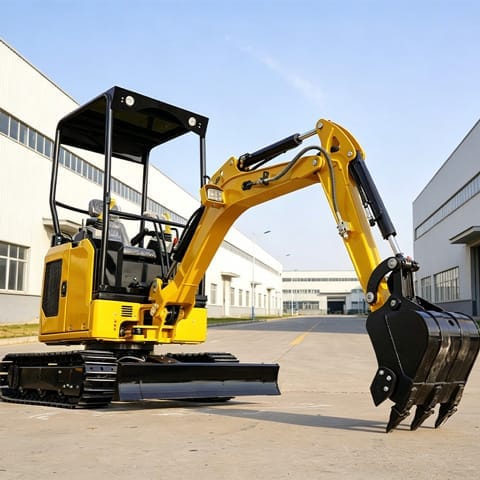
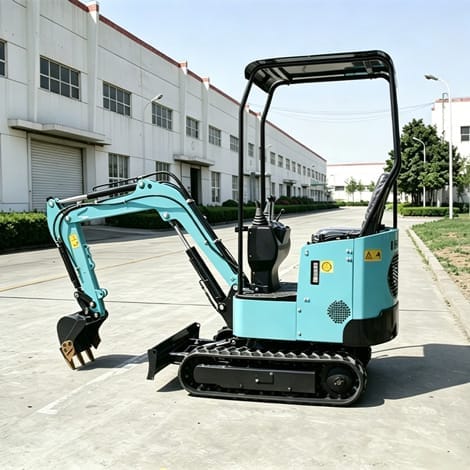
Choosing the right mini excavator is not simply a matter of selecting the largest machine within your budget. The right choice depends on the working environment, required digging performance, available access, transport requirements, attachments, and the type of work the machine will perform.
For contractors, landscapers, utility crews, property owners, and other users, a compact excavator can provide digging, trenching, grading, demolition, and material-handling capabilities in areas where a larger excavator may be impractical. The challenge is finding the right balance between machine size, digging performance, maneuverability, and operating cost.
This guide explains the specifications that matter most when comparing mini excavators, how to choose between different operating-weight classes, what to consider when evaluating tail swing and hydraulic compatibility, and how to compare machines before requesting a quotation.
For buyers who want to compare actual models after reviewing the selection criteria, you can explore the CSTAR mini excavator range.
1. Key Mini Excavator Specifications: What Should You Compare?
Mini excavator specifications can look complicated because manufacturers provide many different measurements. In practice, several core specifications are especially important when determining whether a machine is suitable for a particular job.
The most useful specifications to compare include operating weight, digging depth, digging radius, digging height, loading height, digging force, overall dimensions, travel speed, and available attachments.
Operating Weight
Operating weight is one of the first specifications to check because it affects transportation, site access, ground pressure, and the overall scale of the machine.
A lighter mini excavator may be easier to transport and more suitable for restricted-access projects. A heavier machine generally provides a larger working platform and may offer greater digging capability, but it may also require more space for transportation and operation.
For example, CSTAR’s current mini excavator range includes models such as the CSGW-12K at 1,000 kg operating weight, the CSGW-17Q at 1,500 kg, and the CSGW-25K at 2,000 kg. These models illustrate how operating weight can be used as a starting point when comparing different machine sizes.
However, operating weight should not be used by itself. Buyers should also check machine width, height, working radius, digging depth, and transport dimensions against the actual jobsite.
Overall Dimensions and Access
A mini excavator is often selected because access is an important constraint. Before purchasing, measure the narrowest entrance, gate, corridor, or working area through which the machine must pass.
Do not assume that a machine in a particular weight class will automatically fit through a certain doorway or gate. Actual machine width and height vary by model and configuration.
Also consider the machine’s transport length and height when planning trailer transportation or container loading.
Maximum Digging Depth
Maximum digging depth indicates how far the bucket can reach below ground level under the manufacturer’s specified configuration.
The required depth depends on the work being performed. Utility trenching, drainage, landscaping, foundation preparation, and general excavation can all require different digging depths.
When comparing machines, use the actual required trench or excavation depth as the starting point rather than choosing a machine simply because it has the highest published digging depth.
Maximum Digging Radius
Maximum digging radius affects how far the machine can work from its operating position.
A greater digging radius can reduce the need to reposition the machine during some jobs, but it should be considered together with the required working space and the machine’s overall dimensions.
Maximum Digging and Loading Height
Digging height and loading height are particularly important when excavated material must be placed into a truck, trailer, hopper, or other elevated location.
A machine may have sufficient digging depth but still be inconvenient for loading if its maximum loading height does not match the target vehicle or container.
For example, the CSGW-12K is listed with a maximum digging height of 2,550 mm and a maximum loading height of 1,850 mm, while the CSGW-25K is listed with a maximum digging height of 3,200 mm and a maximum loading height of 2,290 mm.
The practical lesson is simple: compare digging depth and loading height separately instead of treating them as the same specification.
Maximum Digging Force
Digging force provides an indication of the machine’s digging capability under specified conditions.
CSTAR lists a maximum digging force of 7.2 kN for the CSGW-12K, 10 kN for the CSGW-17Q, and 16 kN for the CSGW-25K. This illustrates the general relationship between machine size and published digging-force ratings within this product range.
Digging force should still be evaluated together with hydraulic performance, bucket configuration, soil conditions, and the type of work being performed.
2. Mini Excavator Size Guide: How Much Machine Do You Need?
Mini excavators are available in a wide range of sizes. Instead of asking which size is universally “best,” buyers should first identify the tightest constraint on the job.
For some projects, the main limitation is site access. For others, it may be digging depth, transport weight, working radius, lifting capability, or attachment requirements.
| Machine Size | Typical Selection Focus | Key Questions |
|---|---|---|
| Very compact models | Restricted access and lighter-duty work | Will the machine fit through the narrowest access point? |
| Approximately 1–1.5 ton class | Balance between compact size and digging capability | Do the operating weight, digging depth, and dimensions match the job? |
| Approximately 1.5–2.5 ton class | General construction, utility and landscaping work | Does the machine provide enough digging performance without becoming too large for the site? |
| Larger compact models | Higher digging performance and larger working range | Can the site and transport equipment accommodate the machine? |
These categories are only a practical way to organize the selection process. Actual model suitability depends on the manufacturer’s specifications and the conditions of the jobsite.
Example: Choosing Between 1.0, 1.5 and 2.0 Ton-Class Machines
CSTAR’s CSGW-12K, CSGW-17Q, and CSGW-25K provide useful examples of how different machine sizes can be compared.
| Model | Operating Weight | Maximum Digging Force | Maximum Digging Depth | Maximum Digging Radius |
|---|---|---|---|---|
| CSGW-12K | 1,000 kg | 7.2 kN | 1,650 mm | 2,400 mm |
| CSGW-17Q | 1,500 kg | 10 kN | 1,880 mm | 3,448 mm |
| CSGW-25K | 2,000 kg | 16 kN | 2,241 mm | 3,800 mm |
These figures show why machine size should be evaluated using several specifications at once. Moving to a larger operating-weight class may provide greater digging performance and working range, but the larger machine must still fit the site’s access and transport requirements.
The CSGW-12K Mini Excavator provides an example of a compact 1,000 kg machine for buyers prioritizing a smaller operating footprint and transport requirements.
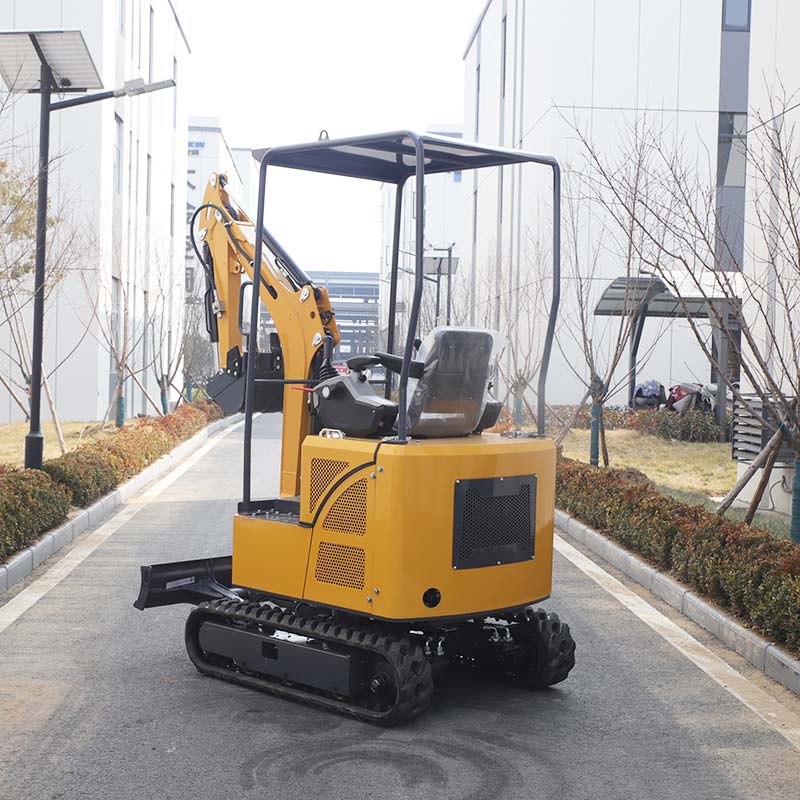
The CSGW-17Q Mini Excavator sits in the next size class and provides higher published digging-force and working-range figures than the smaller 12K.
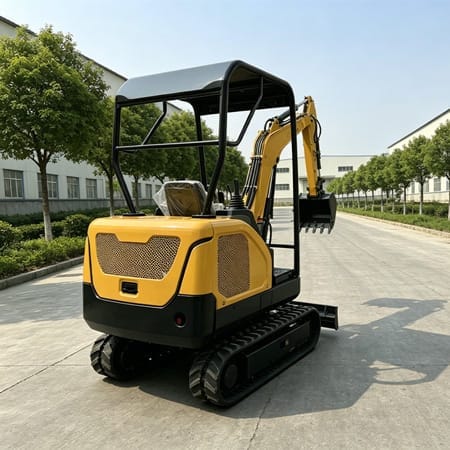
The CSGW-25K Mini Excavator provides another step up in operating weight and published digging force, making it a useful reference when comparing different compact excavator classes.
3. Zero Tail Swing vs. Conventional Tail Swing
Tail swing is an important consideration when working near buildings, walls, fences, roads, vehicles, or other fixed structures.
On a conventional-swing excavator, the rear of the machine moves beyond the track footprint during rotation. A zero-tail-swing or reduced-tail-swing configuration can reduce the amount of rear clearance required, depending on the machine design.
When Is Reduced Tail Swing Useful?
Reduced tail swing can be particularly useful when working in confined areas where the machine cannot simply be repositioned to create more clearance.
Typical examples include:
- Utility work in restricted corridors
- Landscaping close to walls or buildings
- Residential construction sites
- Foundation and drainage work near structures
- Work in narrow access areas
However, buyers should not choose a machine based only on its tail-swing designation. Compare the actual tail dimensions, total machine width, turning requirements, operator visibility, and working envelope.
The best configuration is the one that provides enough working clearance for the actual jobsite while still delivering the required digging and attachment performance.
4. Engine and Powertrain Considerations
Engine selection should be based on the intended market, operating environment, service requirements, and applicable regulations.
Different mini excavator models may use different engine brands and configurations. When comparing machines, check the exact engine brand and model rather than relying only on horsepower.
Also consider:
- Engine brand and model
- Applicable emissions requirements
- Availability of service and replacement parts
- Fuel requirements
- Expected operating conditions
- Documentation required for the destination market
Emissions Compliance for Export Markets
Emissions requirements can vary by country, engine power category, and intended use. Buyers importing equipment into regulated markets should confirm the applicable requirements before placing an order.
Rather than relying solely on a sales brochure, procurement teams should request the appropriate engine and emissions documentation for the specific model being purchased.
This is especially important when equipment may later be resold or used in projects that require specific compliance documentation.
5. Application Scenarios: Match Machine Size to the Job
The correct mini excavator is determined by the actual working conditions rather than by machine size alone.
Utility Trenching and Cable Work
Utility installation often involves trenching in restricted areas. In these situations, buyers should pay close attention to digging depth, overall width, digging radius, travel dimensions, and attachment compatibility.
A compact model may be advantageous when access is limited, while a larger machine may be more suitable when greater digging force or working range is required.
Landscaping and Garden Construction
Landscaping projects frequently combine excavation with grading, trenching, material handling, and vegetation-related work.
For these applications, maneuverability and attachment compatibility can be just as important as maximum digging performance.
Demolition and Concrete Breaking
Mini excavators can be fitted with hydraulic breakers and other attachments for selected demolition and concrete-breaking applications.
When using a breaker or another high-demand hydraulic attachment, confirm that the excavator’s auxiliary hydraulic system is compatible with the attachment requirements.
Drainage and Small Earthwork Projects
Drainage channels, small foundations, landscaping preparation, and general earthwork can all require different combinations of digging depth, machine width, and working radius.
For these projects, compare the required digging depth and machine dimensions first, then evaluate whether the available digging force and attachment options are appropriate.
Indoor or Restricted-Access Work
Small demolition and renovation projects can require equipment that fits through restricted access points.
For indoor applications, check not only the machine’s width but also its transport height, ventilation requirements, floor conditions, working clearance, and attachment suitability.
6. The Attachment Multiplier: Think Beyond the Standard Bucket
One advantage of a mini excavator is the ability to use different attachments for different jobs.
Depending on the model and configuration, available attachments may include:
- Hydraulic breaker
- Earth auger
- Ripper
- Grapple
- Rake
- Large-capacity bucket
- Mud bucket
- Quick coupler
CSTAR’s product pages list a range of attachments and accessories across its mini excavator models, including hydraulic breakers, augers, rippers, grapples, rakes, buckets, quick couplers, and other equipment.
Check Hydraulic Compatibility First
Attachment compatibility should never be determined by the excavator’s operating weight alone.
Before purchasing an attachment, confirm the excavator’s auxiliary hydraulic flow, pressure, attachment weight, mounting interface, and model-specific requirements.
A hydraulic attachment that is not correctly matched to the machine may not perform as intended and can place unnecessary demands on the hydraulic system.
7. Understanding Total Cost of Ownership
The purchase price of a mini excavator is only one part of the total cost of ownership.
A more useful comparison considers the entire operating period.
| TCO Factor | What to Consider |
|---|---|
| Purchase price | Machine configuration, engine, attachments, and delivery terms |
| Fuel consumption | Expected working hours and operating conditions |
| Routine maintenance | Engine, hydraulic system, filters, lubricants, and other service items |
| Wear parts | Tracks, bucket teeth, hoses, and other components affected by usage |
| Downtime | Parts availability and after-sales support |
| Resale value | Machine condition, maintenance history, brand support, and parts availability |
A lower purchase price may be attractive, but it should be evaluated alongside expected operating hours, maintenance requirements, spare-parts availability, and after-sales support.
For overseas buyers, supplier support can be particularly important because downtime and replacement-part logistics can affect the real operating cost of the machine.
8. How to Evaluate a Mini Excavator Supplier
Choosing the machine is only part of the purchasing decision. The supplier also matters, especially for overseas buyers who may need spare parts, technical support, customization, or documentation after delivery.
Before placing an order, consider:
- Does the supplier provide complete technical specifications?
- Can the supplier provide engine and compliance documentation for the destination market?
- Are spare parts and wear parts available?
- Can the supplier support customized configurations?
- Is there a clear after-sales service process?
- Can the supplier provide the attachments required for the job?
- Are shipping and delivery terms clearly defined?
A reliable supplier should be able to answer these questions before the purchase is finalized, rather than leaving important specifications unclear until after the order is placed.
9. A Practical Mini Excavator Pre-Purchase Checklist
Before requesting a quotation, confirm the following points against your actual job requirements:
- Operating weight matches your site access and transport requirements
- Machine width fits the narrowest entrance or working area
- Digging depth meets the required excavation depth
- Digging radius provides sufficient working coverage
- Loading height matches your truck, trailer, or unloading requirements
- Digging force is suitable for the expected soil and work conditions
- Tail-swing configuration matches the available working clearance
- Engine and emissions documentation is suitable for the destination market
- Hydraulic specifications match the intended attachments
- Spare-parts and after-sales support are available
- Transport dimensions have been checked before shipment
The goal is not to find the machine with the largest number in every specification. The goal is to find the smallest or most suitable machine that can reliably perform the required work within the site’s physical and operational constraints.
10. Explore CSTAR Mini Excavator Solutions
Once the application requirements are clear, buyers can compare actual machine configurations within CSTAR’s mini excavator range.
The CSGW-12K is a 1,000 kg mini excavator with a listed maximum digging force of 7.2 kN, making it one of the more compact options in the current range.
The CSGW-17Q is listed at 1,500 kg operating weight with a maximum digging force of 10 kN and a maximum digging depth of 1,880 mm.
The CSGW-25K is listed at 2,000 kg operating weight with a maximum digging force of 16 kN and a maximum digging depth of 2,241 mm.
These models illustrate a useful selection principle: compare operating weight, digging performance, working dimensions, and application requirements together rather than selecting equipment from one specification alone.
For the complete range of available configurations, visit the CSTAR Mini Excavator category.
Frequently Asked Questions
What size mini excavator do I need?
The right size depends on the work rather than a single universal rule. Start with the required digging depth, site access, machine width, transport requirements, working radius, and expected attachments. A smaller machine may be preferable where access is limited, while a larger compact excavator may be more suitable when greater digging performance is required.
What is the most important mini excavator specification?
There is no single specification that determines suitability. Operating weight, machine dimensions, digging depth, digging radius, digging force, loading height, tail swing, and hydraulic compatibility should be evaluated together.
What is the difference between a 1-ton and 2-ton mini excavator?
A larger operating-weight class generally provides a larger working platform and can offer greater digging performance and working range, but it may also require more space for access and transportation. The correct choice depends on the jobsite and required performance.
Why is digging depth important?
Digging depth indicates how far the machine can excavate below ground level under the manufacturer’s specified configuration. It should be compared with the actual trenching or excavation depth required for your project.
What should I check before using attachments?
Check the excavator’s auxiliary hydraulic flow and pressure, attachment weight, mounting interface, and compatibility requirements. The attachment should be matched to the machine according to the manufacturer’s specifications.
Is zero tail swing always better?
No. Reduced or zero tail swing can be advantageous in confined working areas, but the best machine still depends on the site’s access, working envelope, digging requirements, and overall machine configuration.
What engine information should I request from an overseas supplier?
Ask for the exact engine brand and model, power specification, applicable emissions documentation, and any relevant compliance information required for your destination market. This is more reliable than evaluating the engine only from the product brochure.
What should I ask a mini excavator manufacturer before buying?
Provide the supplier with your required operating weight range, desired digging depth, available access width, ground conditions, working environment, planned attachments, destination country, and transport requirements. This gives the manufacturer enough information to recommend a suitable configuration.