Choosing the right electric forklift is an important decision for any warehouse, factory, logistics center, or distribution operation. The right model can improve productivity, reduce operating costs, and make material handling safer. However, choosing the wrong capacity, battery type, lift height, or forklift configuration can lead to unnecessary costs and operational limitations.
Before buying an electric forklift, you should evaluate your load requirements, lift height, warehouse aisle width, daily operating hours, working environment, and battery preferences. This guide explains the most important factors to help you choose the right electric forklift for your application.
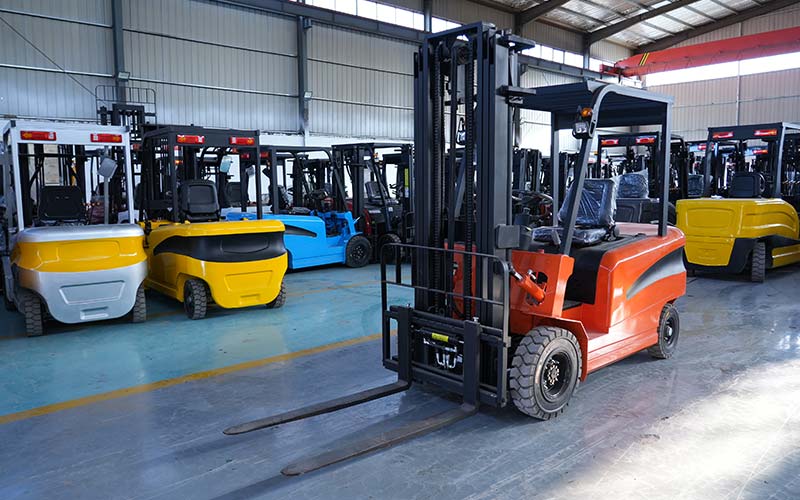
1. Determine Your Required Load Capacity
The first and most important factor when choosing an electric forklift is load capacity. You should calculate the maximum weight of the loads you handle regularly instead of choosing a forklift based only on your average load.
For example, if most of your pallets weigh 1,200 kg but your operation occasionally handles loads close to 1,500 kg, selecting a forklift with only the minimum required capacity may leave little safety margin. The correct forklift should match your actual application and operating conditions.
| Typical Load | Recommended Capacity | Common Applications |
|---|---|---|
| Up to 1,500 kg | 1.5 Ton | Retail warehouses, small factories, pallet handling |
| Up to 2,000 kg | 2.0 Ton | General warehouses and manufacturing facilities |
| Up to 2,500 kg | 2.5 Ton | Medium-duty industrial applications |
| Up to 3,000 kg | 3.0 Ton | Heavy-duty warehouses and industrial material handling |
1.5 Ton Electric Forklifts
A 1.5-ton electric forklift is often suitable for lighter warehouse operations, palletized goods, retail distribution, and applications where maneuverability is important.
If your operation mainly handles standard pallets and lighter loads, you can consider the CSAE-15 Electric Forklift.
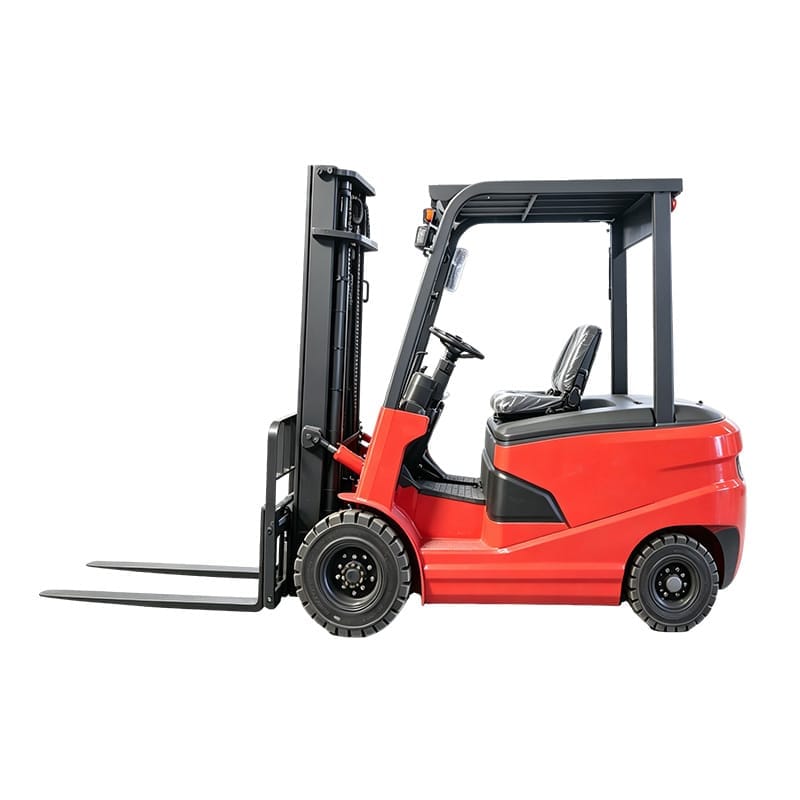
2.0 Ton Electric Forklifts
A 2.0-ton electric forklift provides additional capacity for general warehouse and manufacturing operations. It can be a practical choice for businesses that regularly handle heavier pallets while still requiring an efficient electric material handling solution.
For this capacity range, you can explore the CSAH-20 Electric Forklift.
2.5 Ton Electric Forklifts
A 2.5-ton forklift is suitable for medium-duty applications where a standard 1.5-ton or 2-ton model may not provide enough capacity. Before choosing this size, make sure your warehouse floor, aisle layout, and operating environment are suitable for the larger equipment dimensions.
For medium-duty material handling, you can consider the CSAH-25 Electric Forklift.
3.0 Ton Electric Forklifts
For heavier industrial materials, machinery components, large pallets, and demanding warehouse operations, a 3.0-ton electric forklift may be a better choice. Higher-capacity forklifts generally provide stronger lifting capability and improved stability for heavier loads, although the required operating space may also increase.
For heavy-duty applications, the CSAH-30 3 Ton Electric Forklift can be considered as part of your equipment selection.
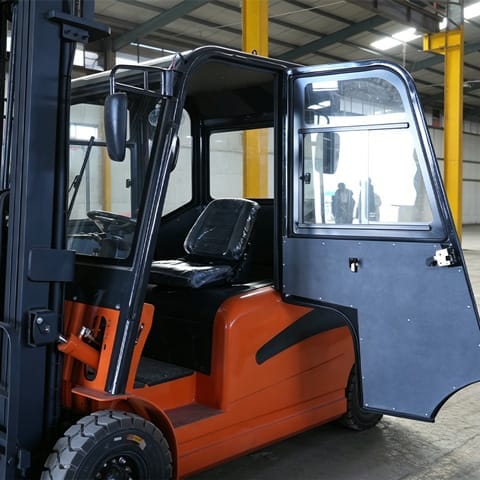
For more capacity options, you can also explore the complete electric forklift range.
2. Choose the Right Lift Height
Load capacity alone is not enough when selecting a forklift. You also need to consider how high your loads must be lifted.
Measure the highest storage rack or loading position in your facility and allow additional clearance for safe operation. A forklift used for ground-level pallet transport may only require a standard mast, while warehouses with higher racking systems may require significantly greater lift height.
| Warehouse Application | Typical Lift Requirement |
|---|---|
| Ground-level pallet handling | Low lift height |
| Standard warehouse racking | Medium lift height |
| High storage racks | Higher lift height |
| Specialized storage systems | Customized mast configuration |
When comparing forklift specifications, always check the rated capacity at the required lift height and load center. Forklift performance can change depending on the load dimensions, mast configuration, attachments, and operating conditions.
Before placing an order, provide your forklift supplier with the following information:
- Maximum load weight
- Load dimensions
- Maximum lift height
- Fork length requirements
- Storage rack dimensions
3. Consider Your Warehouse Aisle Width
Warehouse aisle width has a major impact on forklift selection. A forklift may have sufficient lifting capacity but still be unsuitable if it cannot maneuver efficiently through your warehouse.
Before purchasing, measure your operating aisles and consider the forklift’s overall dimensions and turning radius. Narrower aisles generally require more maneuverable equipment, while wider aisles provide more flexibility for larger forklifts.
| Warehouse Condition | Recommended Equipment Consideration |
|---|---|
| Narrow operating space | Compact and highly maneuverable equipment |
| Standard warehouse aisles | Standard electric forklift configuration |
| High-density storage | Specialized warehouse equipment may be required |
| Small storage area | Compact forklifts or stackers may be suitable |
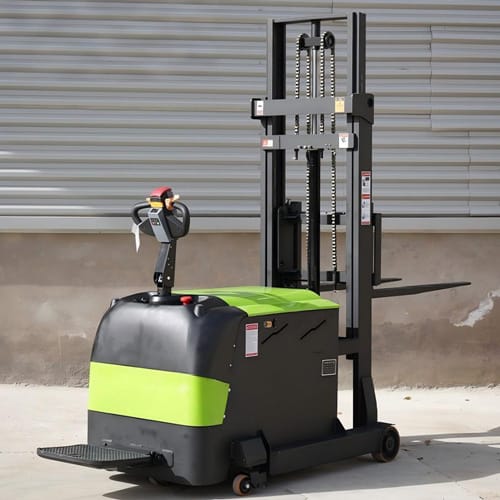
For high-density storage operations where vertical pallet handling is more important than long-distance transport, a stacker may also be a practical option. You can read our guide on how to choose the right stacker forklift for your warehouse.
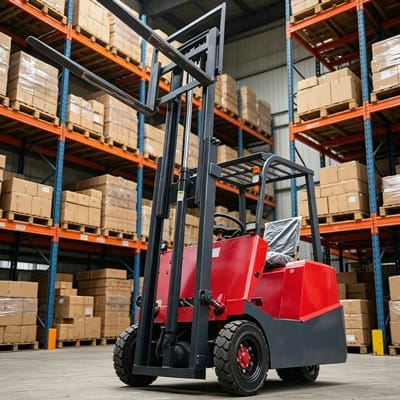
4. Choose Between 3-Wheel and 4-Wheel Electric Forklifts
Another important decision is whether you need a 3-wheel or 4-wheel electric forklift. Both configurations can be suitable for warehouse applications, but they offer different advantages.
| Feature | 3-Wheel Electric Forklift | 4-Wheel Electric Forklift |
|---|---|---|
| Maneuverability | Excellent | Good |
| Tight Warehouse Aisles | Very suitable | Suitable depending on layout |
| Turning Radius | Generally smaller | Generally larger |
| Stability | Suitable for standard applications | Strong overall stability |
| Heavier Loads | Depends on model and configuration | Often preferred for demanding applications |
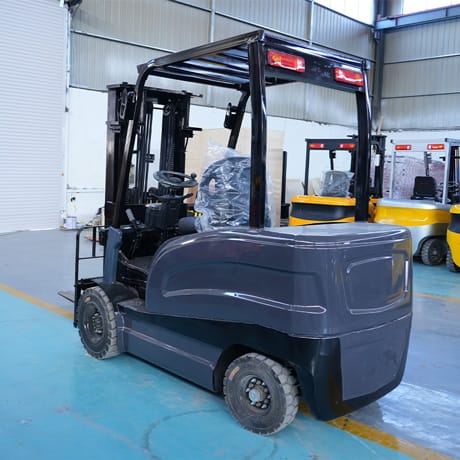
A 3-wheel electric forklift can be attractive when maneuverability and a tight turning radius are priorities. A 4-wheel electric forklift may be more suitable when stability, larger loads, and demanding operating conditions are more important.
The best choice depends on your warehouse layout and application rather than one configuration being universally better than the other.
5. Lithium-Ion vs. Lead-Acid Forklift Batteries
Battery technology is one of the biggest factors affecting electric forklift operating costs and daily productivity. The two most common options are lithium-ion and lead-acid batteries.
| Factor | Lithium-Ion | Lead-Acid |
|---|---|---|
| Initial Investment | Generally higher | Generally lower |
| Charging Speed | Generally faster | Generally slower |
| Opportunity Charging | Suitable for many applications | More limited depending on battery management |
| Maintenance | Low routine maintenance | Requires regular maintenance |
| Multi-Shift Operations | Well suited | May require additional battery management |
When Should You Choose Lithium-Ion?
Lithium-ion batteries can be particularly suitable for operations with multiple shifts, high equipment utilization, limited battery storage space, and frequent opportunities for short charging periods.
When Should You Choose Lead-Acid?
Lead-acid batteries can still be a practical option for businesses with lower daily operating hours, single-shift operations, and a stronger focus on reducing initial equipment costs.
6. Consider Indoor vs. Outdoor Operation
Electric forklifts are widely used in indoor warehouses because they operate without tailpipe emissions and typically produce lower operating noise than internal combustion equipment.
However, your working environment should always be considered before making a purchasing decision. Some operations involve smooth indoor warehouse floors, while others require equipment to work on loading docks, outdoor yards, uneven surfaces, or mixed indoor and outdoor environments.
| Operating Environment | Electric Forklift Suitability |
|---|---|
| Indoor warehouse | Excellent |
| Food and pharmaceutical facilities | Common choice due to zero tailpipe emissions |
| Loading docks | Depends on surface and weather conditions |
| Smooth outdoor surfaces | Depends on model and configuration |
| Rough terrain or severe outdoor conditions | Specialized equipment may be more suitable |
Electric forklifts can also operate in certain outdoor environments, but you should confirm the equipment specifications, tire type, weather protection, and surface conditions before purchase.
7. Consider Your Daily Operating Hours
How many hours your forklift operates each day will directly affect your battery and charging requirements.
| Daily Usage | Recommended Consideration |
|---|---|
| Light daily use | Standard battery configuration may be sufficient |
| Single full shift | Battery capacity should support the complete operating schedule |
| Multiple shifts | Fast charging and efficient battery management become more important |
| High-utilization operations | Lithium-ion and charging infrastructure may provide operational advantages |
Before purchasing, estimate your actual daily forklift usage rather than simply assuming that every forklift needs the largest battery available. The right battery should balance operating time, charging availability, and overall investment.
You should also consider:
- Number of shifts per day
- Average operating hours
- Available charging time
- Charging infrastructure
- Backup equipment availability
8. Consider Attachments and Special Requirements
Your forklift may need more than standard forks. Depending on the materials you handle, attachments can improve productivity and reduce manual handling.
Common forklift attachment considerations include:
- Side shifters
- Fork positioners
- Different fork lengths
- Paper roll clamps
- Carton clamps
- Specialized attachments for specific industries
When using attachments, remember that they can affect the forklift’s capacity and operating characteristics. Always confirm the final rated capacity with the equipment supplier based on the complete forklift configuration.
9. When Should You Choose a Stacker or Pallet Truck Instead?
An electric forklift is not always the most cost-effective solution for every warehouse task.
If your operation mainly involves vertical pallet stacking in limited spaces and handles relatively light loads, a stacker may be a more suitable choice. You can learn more from our guide on how to choose the right stacker forklift for your warehouse.
For short-distance horizontal pallet transportation without the need for significant lifting height, an electric pallet truck may provide a simpler and more economical solution.
You can explore our available pallet truck options for different warehouse material handling requirements.
10. Final Checklist Before Buying an Electric Forklift
Before making your final purchasing decision, review the following checklist:
- Load Capacity: What is your maximum pallet or material weight?
- Lift Height: How high must your forklift lift?
- Aisle Width: Can the forklift maneuver safely in your warehouse?
- Battery Type: Is lithium-ion or lead-acid more suitable?
- Daily Operating Hours: How many hours will the forklift operate?
- Working Environment: Indoor, outdoor, or mixed operation?
- Attachments: Do you need side shifting, clamps, or special forks?
- Future Growth: Will your material handling requirements increase?
Choosing the right electric forklift is not simply about selecting the highest capacity or lowest price. The best solution should match your actual warehouse workflow, load requirements, operating hours, and available space.
By evaluating these factors before purchasing, you can select equipment that improves productivity and provides a better long-term return on investment.
For additional capacity and configuration options, explore our complete electric forklift collection and compare models based on your specific material handling requirements.
FAQ
Q1: How long does a lithium-ion forklift battery last?
A: Unlike traditional lead-acid batteries that last around 1,500 charge cycles, a high-quality lithium-ion battery can last up to 3,000 to 5,000 cycles. With proper care, this translates to a lifespan of 7 to 10 years, often outlasting the forklift itself.
Q2: Can electric forklifts be used outdoors or in the rain?
A: Yes, but it depends on the model’s IP (Ingress Protection) rating. While early electric models were strictly for indoor use, modern electric forklifts can feature sealed motors and waterproof components, allowing them to operate safely outdoors in light rain or on loading docks. However, for deep mud or heavy off-road construction, diesel forklifts remain the better choice.
Q3: How long does it take to charge an electric forklift?
A: A traditional lead-acid battery takes about 8 hours to fully charge, plus another 8 hours to cool down. In contrast, lithium-ion batteries support “fast charging” and can reach a full charge in just 1 to 2 hours. They also allow for short top-ups (opportunity charging) during operator breaks without damaging the battery.
Q4: Do electric forklifts require less maintenance than diesel ones?
A: Absolutely. Electric forklifts have significantly fewer moving parts. There is no engine oil to change, no spark plugs to replace, and no transmission filters to maintain. The primary maintenance involves checking the hydraulic system, tire wear, and occasionally inspecting the battery health, making them much cheaper to maintain long-term.