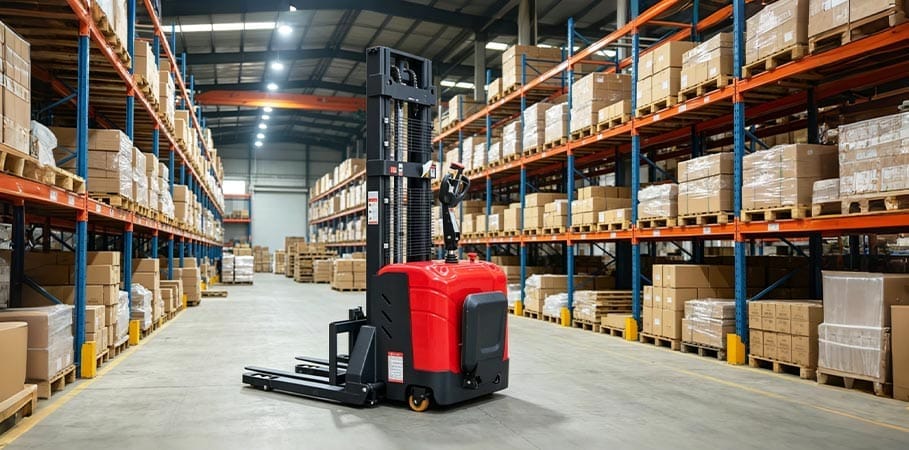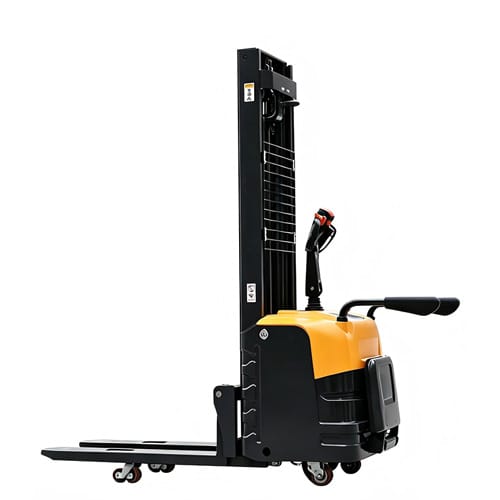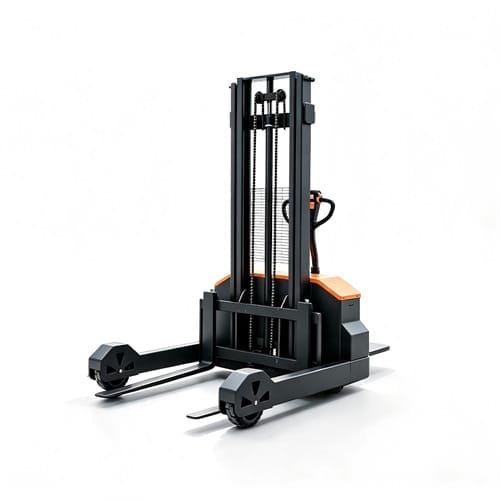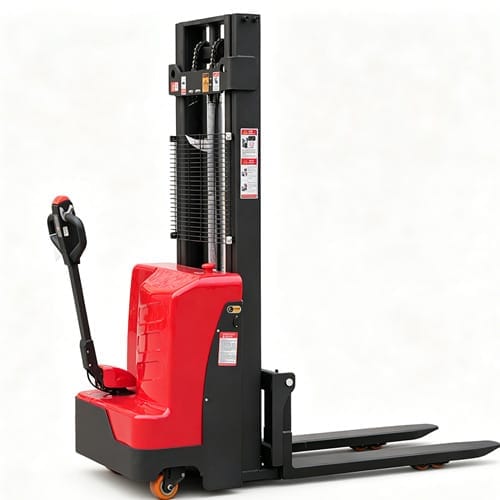
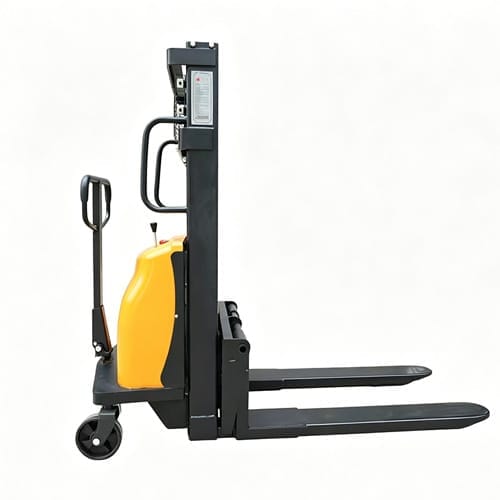
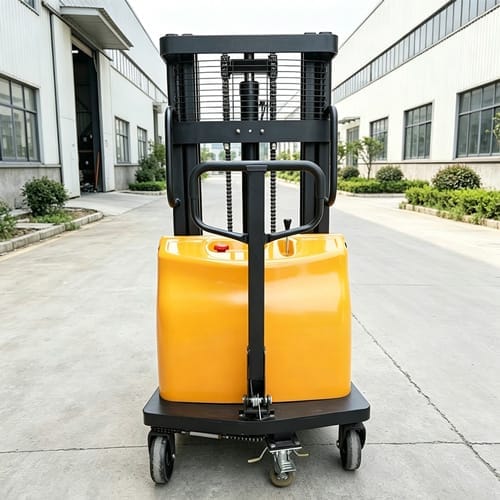
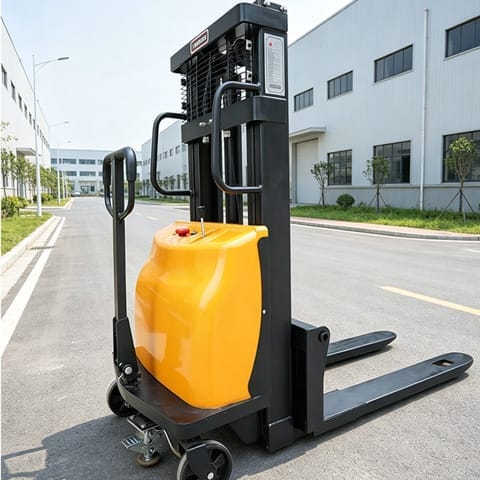
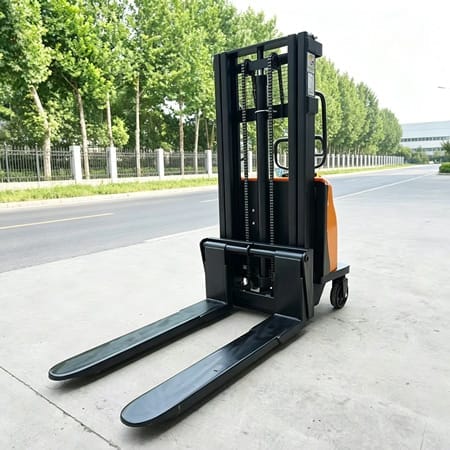
Electric forklifts have become a common choice in modern warehouses, but “electric” alone doesn’t explain why a distribution center, a cold store and an e-commerce fulfillment operation may choose battery power over diesel. The real answer depends on what the warehouse actually does day to day — how often the truck runs, what it shares floor space with, and how the building itself is designed.
This guide covers where electric forklifts are used inside warehouses, what separates one application from another, and how to size a truck for your specific operation. For step-by-step configuration advice, see our electric forklift buying guide.
Why Are Electric Forklifts Popular in Modern Warehouses?
Warehouses are enclosed, and that single fact drives much of the decision. A diesel or LPG engine produces exhaust that has to be managed through ventilation and appropriate workplace controls. An electric forklift produces no combustion exhaust at the point of use, although normal building ventilation and the requirements of the selected battery-charging area still need to be considered.
Noise is the second factor, and it matters more than buyers often expect. A warehouse running two or three shifts has forklifts moving constantly near pickers, packers and other pedestrian staff. Electric drivetrains run quieter than internal combustion engines, which reduces fatigue over a full shift and makes verbal communication and safety alerts easier to hear on the floor.
Indoor floors also tend to be smooth, sealed concrete. Without the traction and ground-clearance demands of an outdoor yard, a warehouse forklift configuration can prioritize maneuverability, turning clearance and aisle compatibility. These figures still vary by model, so the complete truck dimensions and turning radius must be checked against the actual layout.
Running cost is the factor that shows up after the purchase decision, not during it. Electricity is generally cheaper per operating hour than diesel fuel, and electric drivetrains have fewer moving parts that wear — no engine oil changes, no fuel filters, no exhaust system to maintain. The tradeoff is charging infrastructure and battery care, which is a real cost but a different kind of cost than fuel and engine service.
Common Warehouse Applications of Electric Forklifts
“Warehouse” covers a wide range of actual operations, and the right electric forklift setup changes with the work.
Distribution Centers
Distribution centers move high volumes of palletized freight in and out on a tight schedule, often across multiple shifts with little downtime between them. The forklift here needs to handle repeated loading and unloading cycles without losing charge mid-shift, which is why many distribution centers are moving toward lithium-ion batteries that support opportunity charging during breaks rather than a single long overnight charge.
Manufacturing Warehouses
Inside a manufacturing facility, forklifts are usually feeding a production line or moving raw material and finished goods between storage and the work floor. The operating pattern is less about long travel distances and more about frequent starts, stops and precise positioning near machinery and staff — which puts a premium on smooth control and quiet operation over raw travel speed.
E-commerce Fulfillment Centers
Fulfillment centers built around individual order picking tend to run narrower aisles than traditional pallet warehouses, since the goal is maximizing storage density rather than moving full pallets end to end. This is where compact and narrow-aisle electric forklifts do the most work — a 1.5 or 2-ton truck with a tight turning radius often fits this environment better than a larger-capacity machine that can’t maneuver the layout.
Cold Storage Warehouses
Cold storage adds a variable most warehouse types don’t deal with: temperature. Battery performance drops in cold conditions, and lubricants and seals need to be rated for the environment. Electric forklifts used in cold storage are usually specified with cold-rated batteries and hydraulic fluids, and operators typically plan shorter continuous run times to account for reduced battery efficiency at low temperatures.
These four categories aren’t rigid boundaries — many warehouses combine elements of more than one. The point of separating them is that “electric forklift for a warehouse” isn’t specific enough to configure a truck; the actual daily pattern of the operation is.
How to Select the Right Electric Forklift for Warehouse Operations
Once the application is clear, five factors do most of the work in narrowing down a configuration:
| Factor | Consideration |
|---|---|
| Load capacity | 1.5–5 ton, based on your heaviest regular pallet or load, not the average |
| Aisle width | Standard racking aisles vs. narrow-aisle or very narrow-aisle (VNA) layouts |
| Lift height | Measured to your top rack level, not the ceiling height |
| Battery type | Lithium-ion for multi-shift and opportunity charging; lead-acid for single-shift with overnight charge time |
| Working hours | Single shift, multi-shift, or continuous — this drives battery capacity and whether a spare battery is needed |
None of these should be decided in isolation. A truck sized correctly for load capacity but too wide for the aisle layout is still the wrong truck, and a battery sized for a single shift will fall short the moment the operation adds a second one.
Electric Forklift Capacity Guide
For most warehouse operations, capacity requirements fall into a fairly predictable range:
- Light pallet handling in retail distribution or small manufacturing — see the CSAE-15 1.5 Ton Electric Forklift
- General warehouse and manufacturing work above the 1.5-ton range — see the CSAE-20 2 Ton Electric Forklift
- Heavier warehouse and industrial handling with regular loads approaching the 3-ton class — see the CSAH-30 3 Ton Electric Forklift
If your regular loads sit close to the top of one of these classes, it’s usually worth checking the next capacity step up rather than running a truck at its limit every shift. See our electric forklift buying guide for the full capacity range and how to compare load center, lift height and battery configuration together.
Electric Forklift vs Diesel Forklift in Warehouse Applications
Inside a warehouse, this comparison is rarely close. Diesel exhaust and ventilation requirements alone rule diesel out for most indoor, enclosed operations — the exception is a warehouse with open loading bays or mixed indoor/outdoor yard work, where a diesel truck may still make sense for the outdoor portion of the job.
If your operation genuinely splits between indoor warehouse work and an outdoor yard, it’s worth reading our full Electric vs. Diesel Forklift comparison before deciding whether to run one type of truck for both environments or specify separate trucks for each.
Why Choose CSTAR Electric Forklifts?
CSTAR manufactures electric forklifts across the capacity range warehouses actually use — from compact 1-ton trucks for narrow-aisle work up through 3-ton and higher-capacity platforms for heavier industrial loads. Battery configuration, lift height and load center are confirmed against your specific site rather than sold as a fixed package, which matters given how much these factors vary between a distribution center, a cold store and a manufacturing floor.
Browse the full range in our Electric Forklift category, or send us your application details directly for a configuration recommendation.
FAQ
Are electric forklifts suitable for all warehouse types?
Electric forklifts can work well in many warehouse environments, including cold storage, food and pharmaceutical facilities, and multi-shift distribution centers, when the truck and battery are configured for the application. Heavy outdoor yard work may instead require a truck selected for the ground conditions, weather exposure and duty cycle.
What capacity electric forklift do most warehouses need?
Most general warehouse operations fall between 1.5 and 3 tons. The right number depends on your heaviest regular load — not the average — plus the load center and any attachments in use.
Is lithium-ion always better than lead-acid for warehouse use?
Not automatically. Lithium-ion suits multi-shift operations that need fast or opportunity charging, but it costs more upfront. A single-shift warehouse with time for a full overnight charge can still get good value from a lead-acid battery.
Request a Warehouse Forklift Recommendation
Tell CSTAR Machinery about your warehouse type, typical load weight, aisle width, lift height and shift pattern. We’ll help match the right electric forklift capacity and battery configuration to your operation.