
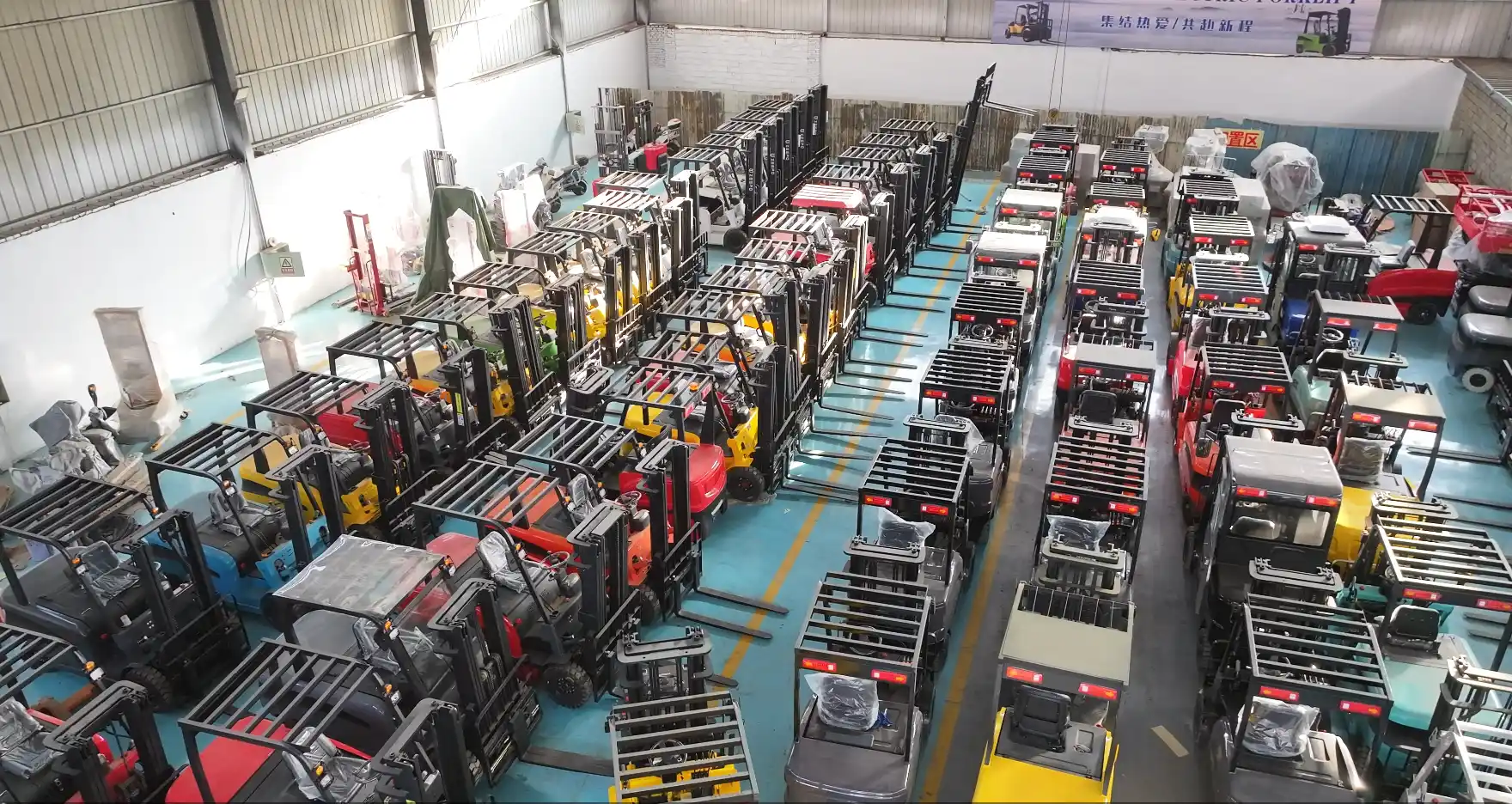
Short answer: start with the heaviest load that appears regularly in your operation, then choose a forklift whose capacity plate covers that load at the required load center, lift height, mast, fork, and attachment configuration. Do not size the truck from the average pallet weight, and do not assume that a “2 ton forklift” can lift every 2,000 kg load under every condition.
The right forklift is not simply the smallest truck with a model name equal to your cargo weight. A machine that is too small can leave operators working at or beyond its rated conditions. A machine that is much larger than the job requires can cost more, consume more operating space, and make aisle planning harder.
This guide gives buyers a practical way to shortlist a capacity class. For definitions of rated capacity, load center, and operating weight, read our separate guide: How Much Can a Forklift Lift?
Start With Your Heaviest Regular Load, Not the Average
Build a short load list before comparing forklift models. For each load that forms part of normal production, record its verified weight, length, width, pallet or support type, required lift height, and handling frequency. The heaviest load that returns as part of the normal workflow should drive the initial capacity shortlist.
For example, suppose most pallets weigh 1,100 kg, but a 1,450 kg pallet arrives several times each week. The 1,450 kg load is not an exception; it is part of the regular duty. Starting with a 1.5 ton class may look logical, but the final selection still depends on where the load’s center of gravity sits, how high it must be lifted, and whether an attachment is fitted.
A genuinely rare load requires a different business decision. You may choose a higher-capacity forklift for the whole operation, or handle that occasional job with rented equipment, a crane, or another suitable machine. Compare the cost and operational impact instead of automatically oversizing every daily movement for one unusual load.
Important: never treat the truck’s capacity rating as permission to overload it “a little.” The capacity plate for the forklift in its actual configuration is the controlling reference.
Quick Guide: Forklift Tonnage by Regular Load
Use this table only to identify the first capacity class worth evaluating. If the load is close to the upper limit—or if it is long, lifted high, or handled with an attachment—the next class may be the correct choice after a capacity review.
| Heaviest regular load | Capacity class to evaluate first | Typical work to assess | CSTAR model to compare |
|---|---|---|---|
| Up to 1,000 kg | 1.0 ton | Light pallets, workshop materials, retail and compact warehouse handling | CSAE-10 electric forklift |
| Over 1,000 to 1,500 kg | 1.5 ton | Standard pallet loads, production supply and smaller warehouse operations | CSAE-15 electric forklift |
| Over 1,500 to 2,000 kg | 2.0 ton | General warehousing, manufacturing materials and pallet transfer | CSAH-20 electric forklift |
| Over 2,000 to 2,500 kg | 2.5 ton | Heavier palletized goods and medium-duty industrial handling | CSAH-25 electric forklift |
| Over 2,500 to 3,000 kg | 3.0 ton | Industrial pallets, machinery parts, building materials and freight handling | CSQD-30 diesel forklift |
| Over 3,000 to 3,500 kg | 3.5 ton | Dense industrial loads, fabrication materials and heavier warehouse handling | Compare 3.5 ton electric options |
| Over 3,500 to 4,000 kg | 4.0 ton | Heavy industrial loads, construction materials and yard work | CSQD-40 diesel forklift |
| Over 4,000 to 5,000 kg | 5.0 ton | Heavy components, steel products, timber and construction materials | CSQD-50 diesel forklift |
| Over 5,000 to 7,000 kg | 7.0 ton | Large fabrications, heavy raw materials and high-capacity outdoor handling | CSQD-70 diesel forklift |
| Over 7,000 to 10,000 kg | 10.0 ton | Heavy machinery, steel, long timber and high-capacity industrial logistics | CSQD-100 diesel forklift |
Boundary loads need extra attention. If your normal load is exactly 2,000 kg, do not approve a 2.0 ton truck from the model name alone. First confirm the load center, lift height, mast, attachment, and residual capacity shown for the proposed configuration.
Why Rated Capacity Is Only the First Filter
Forklift ratings are tied to stated test conditions. Moving the load’s center of gravity farther forward increases the overturning moment. Raising the load higher, changing the mast, or fitting a side shifter, clamp, fork positioner, or other attachment can also reduce the capacity available at the forks.
That is why a model shortlist must become an application review. Give the supplier the actual load—not just a tonnage label—and request the capacity available at the required lift height with the intended attachment installed. Our forklift capacity and load-center guide explains these terms in detail.
Example: a warehouse regularly handles a 1,850 kg long load at a 600 mm load center, places it on high racking, and requires a side shifter.
The “2 ton” label is not enough to approve a 2.0 ton forklift. The buyer should submit the load dimensions, center of gravity, lift height, and side-shifter requirement so the supplier can compare the truck’s residual-capacity information. A 2.5 or 3.0 ton class may be necessary, but the correct answer must come from the rated configuration rather than a guessed percentage.
Electric or Diesel: Does Power Type Change the Tonnage Decision?
The capacity check is the same for electric and diesel forklifts: the truck must be rated for the real load under the actual operating configuration. Power type becomes a separate decision involving workplace emissions rules, indoor or outdoor use, floor and ground conditions, shift length, charging or refueling arrangements, service access, and local operating costs.
Do not assume that every electric truck is smaller or lighter than a diesel truck of the same nominal capacity. Batteries, chassis design, tires, counterweight, mast, and equipment configuration all affect dimensions and service weight. Compare the specifications and capacity plate of the actual models being considered.
For a focused comparison, see Electric vs Diesel Forklift: Which Should You Choose?
When to Consider a Higher Capacity Class
Moving up a capacity class should solve a documented requirement, not provide vague reassurance. Review a larger truck when one or more of these conditions apply:
- Your recurring load sits at the truck’s nominal limit. Ask for the residual capacity at the real load center and lift height rather than operating continuously at an unverified boundary.
- The load is long, deep, or irregular. A forward center of gravity can matter more than the scale weight alone.
- You need a high mast or heavy attachment. Obtain capacity information for the exact mast-and-attachment combination.
- Heavier work is becoming normal. If planned contracts or production changes will add recurring heavier loads, include those verified loads in the purchase specification.
- The current truck cannot complete the task within its capacity plate. Stop using workarounds and reassess the equipment, load, and handling method.
When Bigger Is Not Better
More capacity is useful only when the site can accommodate the machine and the work requires it. Moving to a larger class can increase purchase and transport costs, service weight, turning space, aisle requirements, tire and component costs, and energy or fuel consumption. The amount of change depends on the model, so compare specifications rather than assuming every capacity step has the same penalty.
A large truck can also create a space problem that its extra capacity does not solve. Measure the narrowest doorway, aisle intersections, rack face clearance, turning area, trailer access, floor loading limits, and overhead restrictions before approving the shortlist. The correct truck must both lift the load and physically complete the route.
Four Variables to Check Before You Choose
1. Load Center
Record the load length and center of gravity. Long or uneven loads can move the effective load center forward and reduce available capacity.
2. Lift Height
State the highest fork position required and the height of the load. Ask for capacity at that height, not only the standard nominal rating.
3. Attachments
Identify side shifters, clamps, rotators, fork positioners, or extensions before selection. Attachment weight and forward offset can change residual capacity.
4. Space and Surface
Check aisle width, turning radius, doorway clearance, floor loading, gradients, surface condition, and indoor or outdoor use.
A Five-Step Forklift Capacity Selection Process
- Define the normal load set. List verified weights, dimensions, pallet types, and handling frequency.
- Shortlist the nominal capacity class. Use the heaviest recurring load as the starting point, not the average.
- Add the operating configuration. Specify load center, lift height, mast, forks, and attachments.
- Test the site fit. Compare truck dimensions, turning requirements, ground conditions, floor loading, and overhead clearance.
- Approve the capacity documentation. Confirm the final capacity plate and supplier documentation match the machine as ordered and configured.
This process separates two questions that buyers often combine: “Can this truck lift the load?” and “Can this truck perform the whole route at our site?” Both must be answered before ordering.
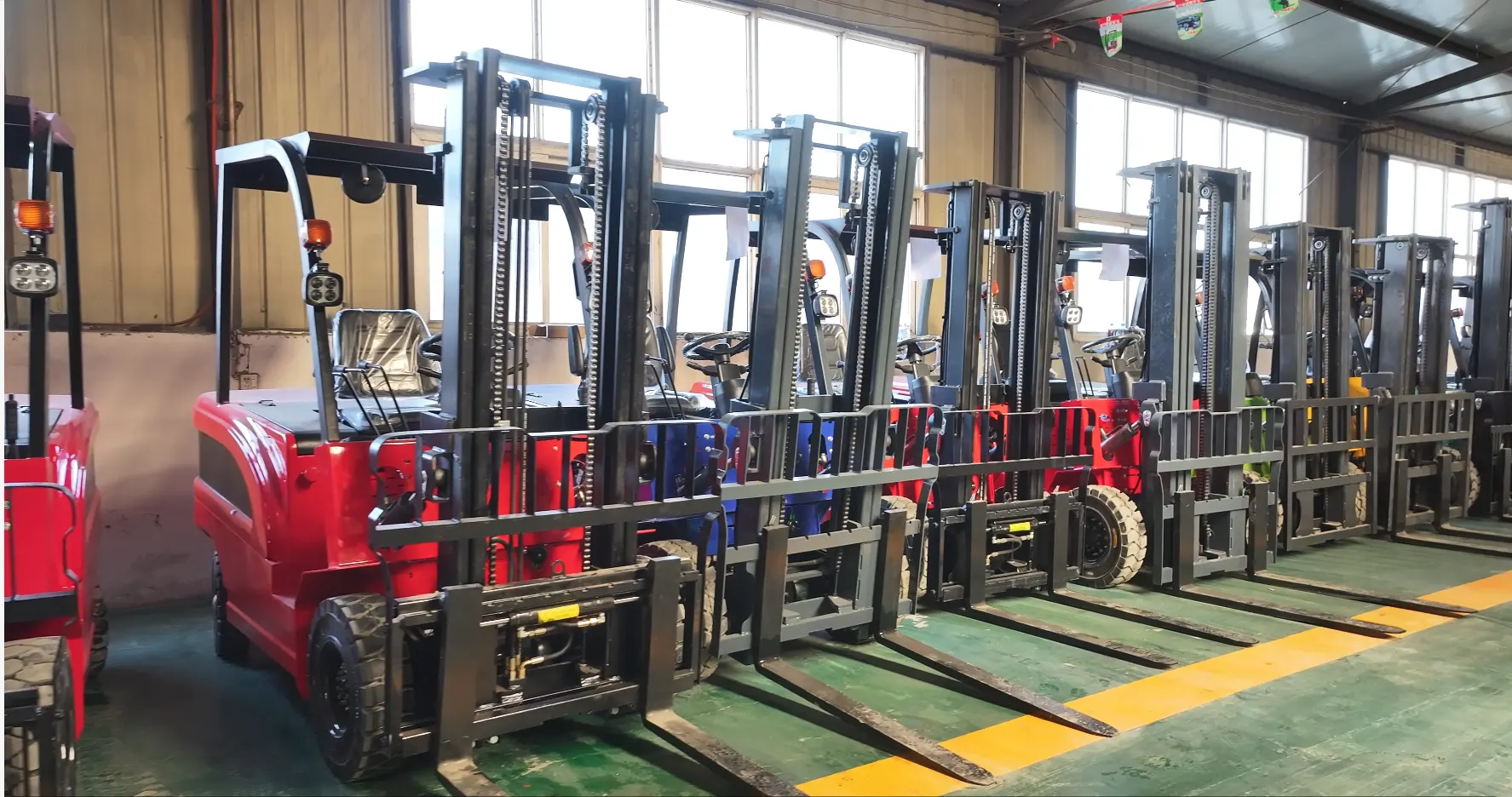
Browse CSTAR Forklifts by Capacity
The models below provide starting points across common capacity classes. Product-page figures describe listed configurations; final selection should be checked against your application data.
- 1.0 ton: CSAE-10 electric forklift
- 1.5 ton: CSAE-15 electric forklift
- 2.0 ton: CSAH-20 electric forklift
- 2.5 ton: CSAH-25 electric forklift
- 3.0 ton: compare electric forklift options
- 3.0 ton diesel: CSQD-30
- 3.5 ton: compare electric forklift options
- 4.0 ton: CSQD-40 diesel forklift
- 5.0 ton: CSQD-50 diesel forklift
- 7.0 ton: CSQD-70 diesel forklift
- 10.0 ton: CSQD-100 diesel forklift
You can also compare the complete CSTAR electric forklift range and CSTAR diesel forklift range.
Frequently Asked Questions
What tonnage forklift do I need for standard pallets?
There is no single tonnage for every standard pallet. Pallet dimensions may be standardized, but load weight, load center, stacking height, and attachments still vary. Use the heaviest regular pallet and its actual handling conditions to select the capacity class.
Can I use a forklift’s maximum load rating as its everyday working capacity?
Only when the load and operating conditions remain within the limits shown on the truck’s capacity plate. A nominal rating does not apply automatically to longer load centers, higher lifts, or attachment-equipped configurations.
Is it better to buy a larger forklift just in case?
Not automatically. A larger truck can require more aisle and turning space and may increase purchase, transport, and operating costs. Size up when a verified load or configuration requires it, then confirm that the larger machine still fits the site.
Does forklift capacity work the same way for electric and diesel models?
Yes. Both must be evaluated using the rated capacity and capacity plate for the actual load center, lift height, mast, and attachment configuration. Power type affects operating suitability, but it does not replace the capacity check.
Ask CSTAR to Check Your Forklift Capacity
For a capacity and model recommendation, send CSTAR Machinery:
- Maximum regular load weight and load dimensions
- Load center or center-of-gravity information, if known
- Required lift height and mast-clearance limits
- Fork and attachment requirements
- Aisle width, floor or ground condition, slopes, and indoor or outdoor use
- Daily operating hours, destination country, and order quantity